

Design Speculation, UX/UI Design
How Do We Love?
A civic infrastructure system where love isn't left to chance, it's designed, built, and maintained like a public utility.
About This Project
How Do We Love? is a speculative design capstone that reframes love as infrastructure. Set in Wisconsin, 2046, the project imagines Cupid on Earth (C.O.E.), a civic body that treats love the way a city treats transit or water: as something built, tended, and maintained on purpose, for everyone. At the center of the system is Cubot, a small companion character who delivers care through consent-based interactions rather than surveillance or automation.
Year
Summer 2026
Concept Design, 3D Character Design, Physical Prototyping, Brand Identity, UX Design
Role
Figma, Blender, Google Flow, Onshape, Premier Pro
Tools
The Challenge
The project started with a question we couldn't stop asking each other: how do we love? Not in theory, in practice, in the everyday. In traffic, in grief, in the small moments no one designs for. We realized love isn't something that just happens to us, it's something we build and maintain, like a road or a power grid. And like any infrastructure, it can be neglected, or it can be designed with care. The challenge was figuring out what it would actually take to design it.
The Solution
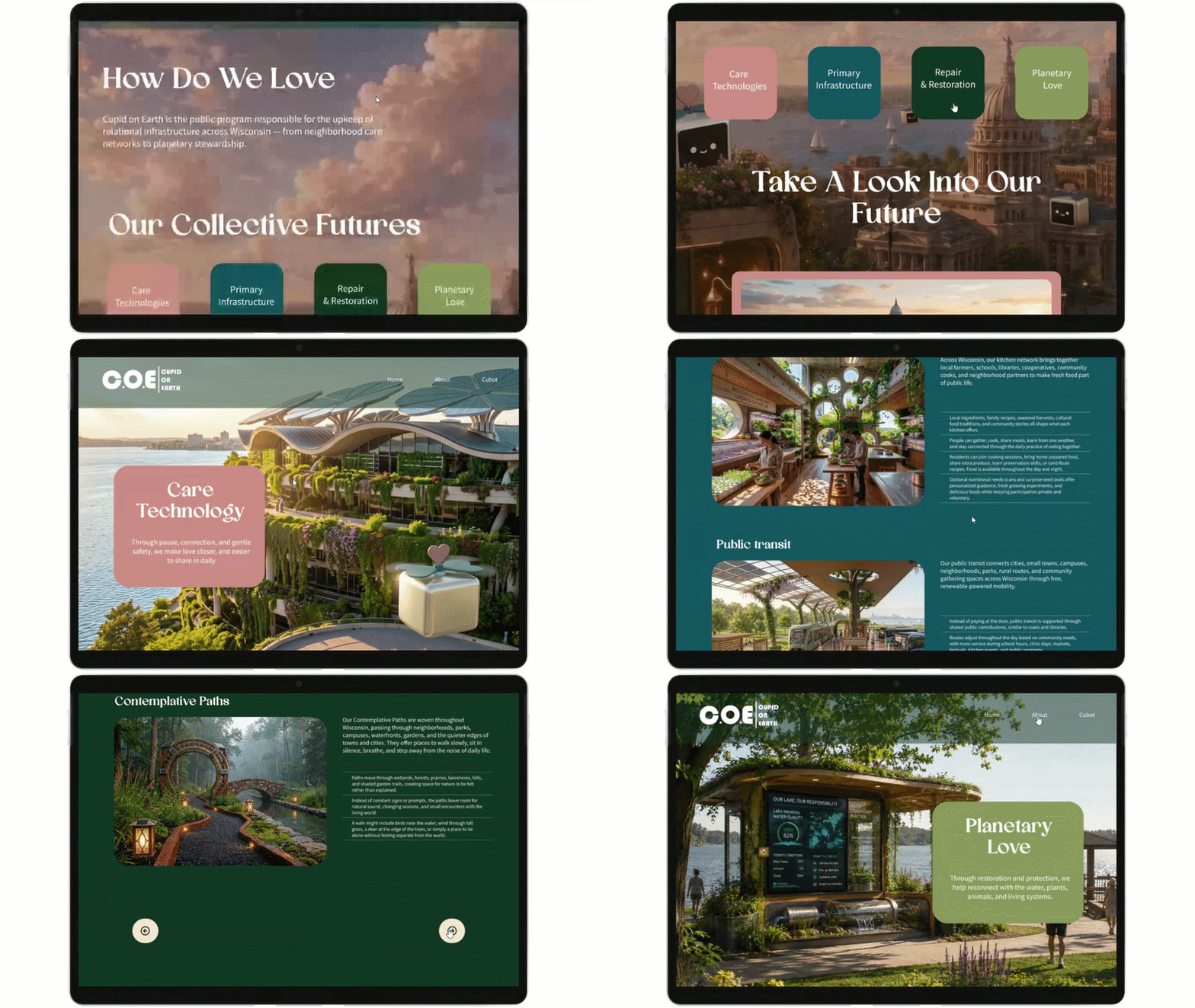
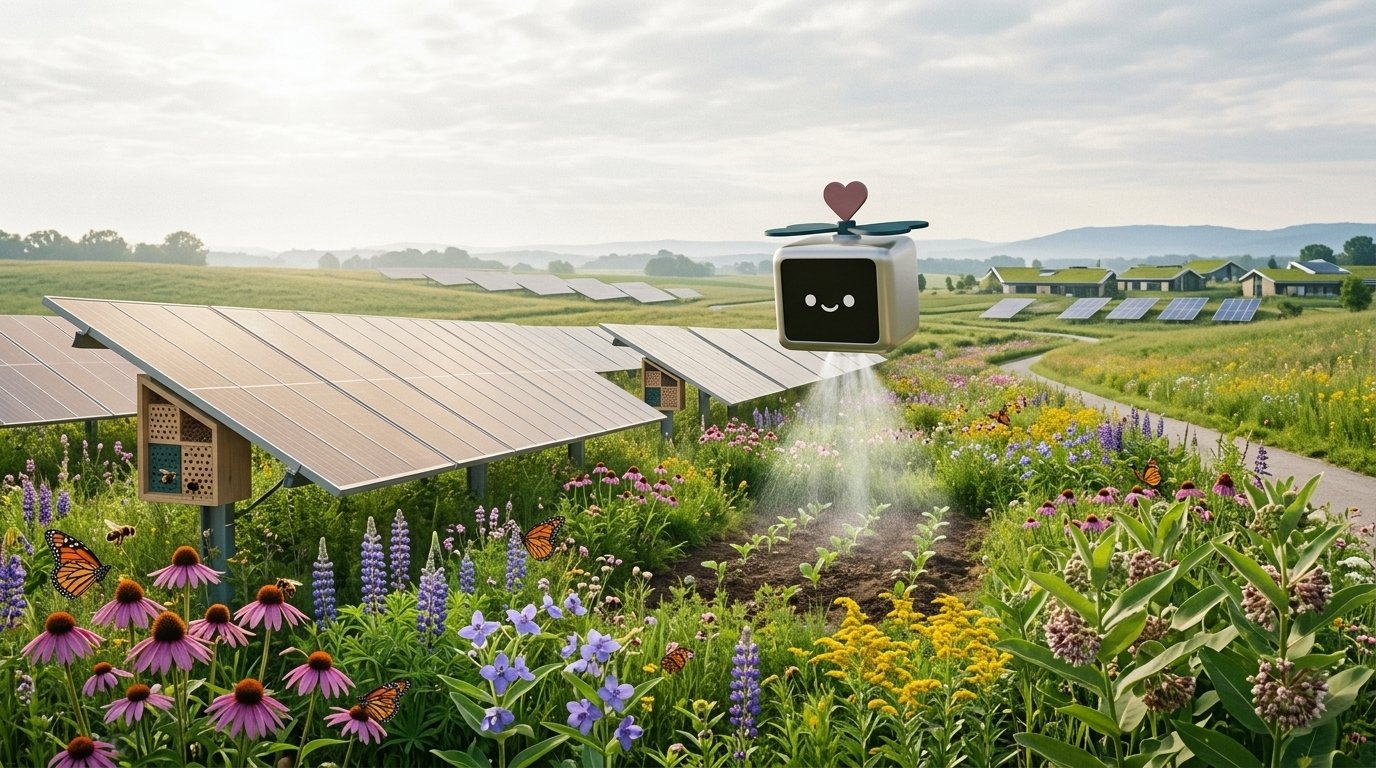
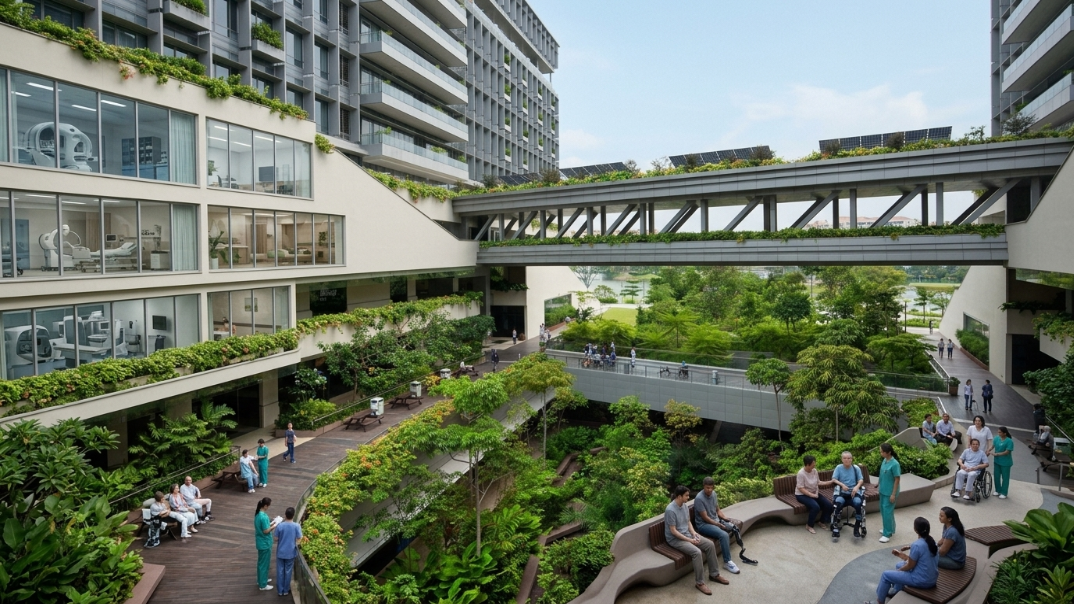
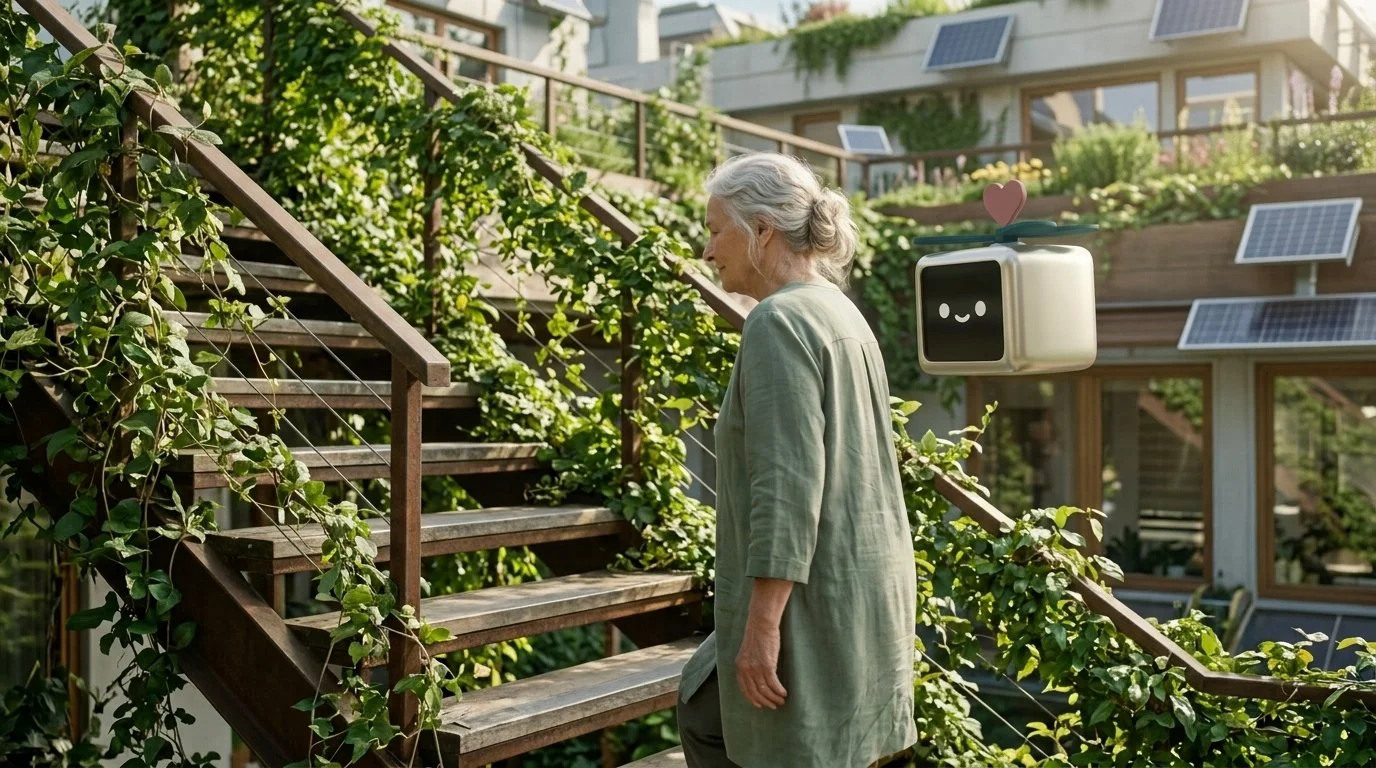
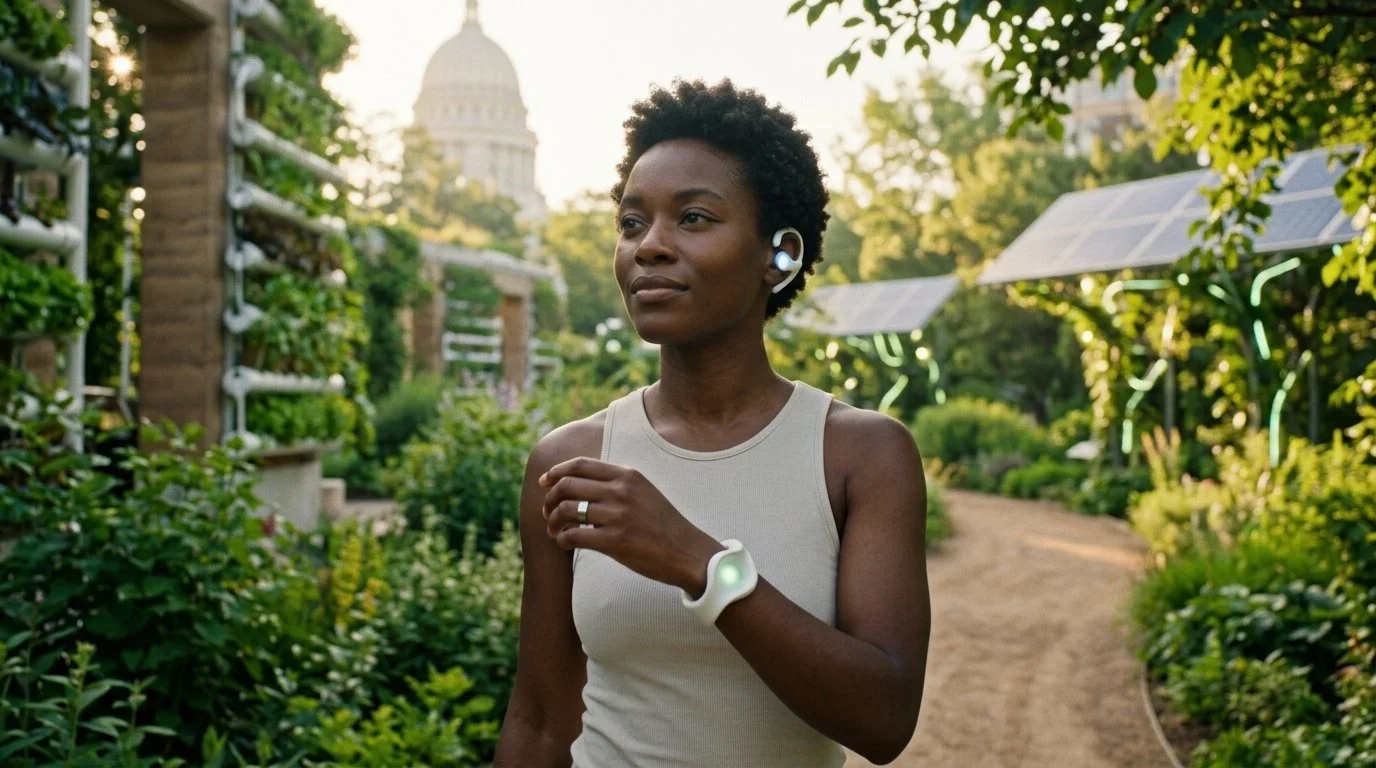
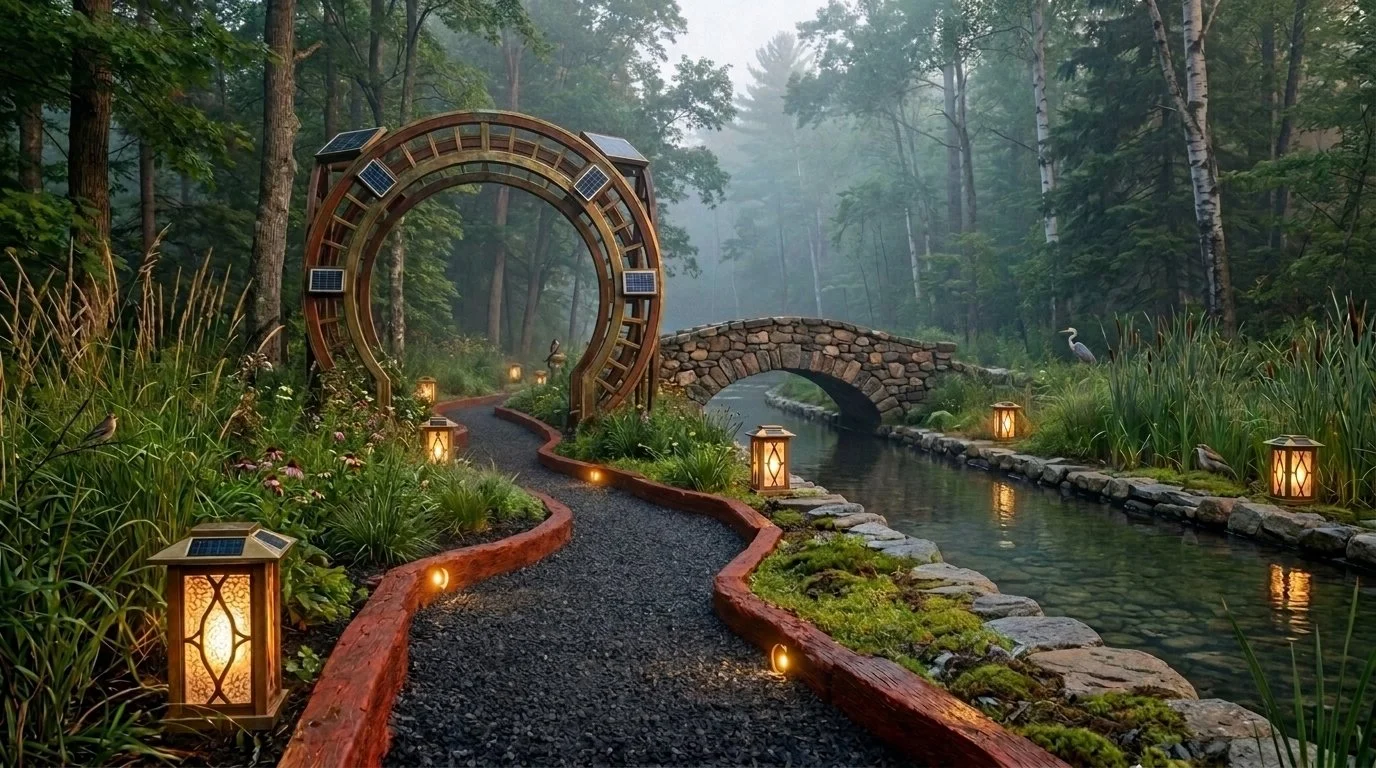
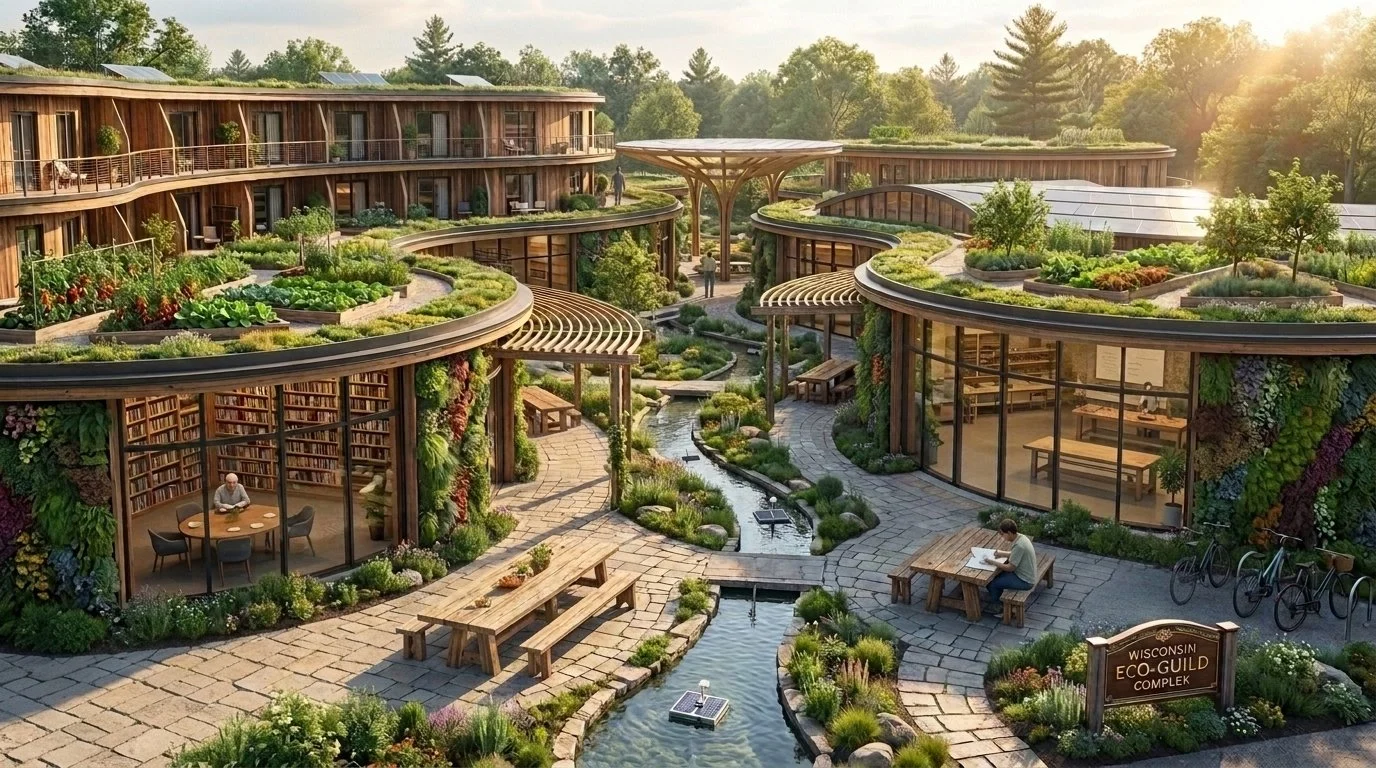
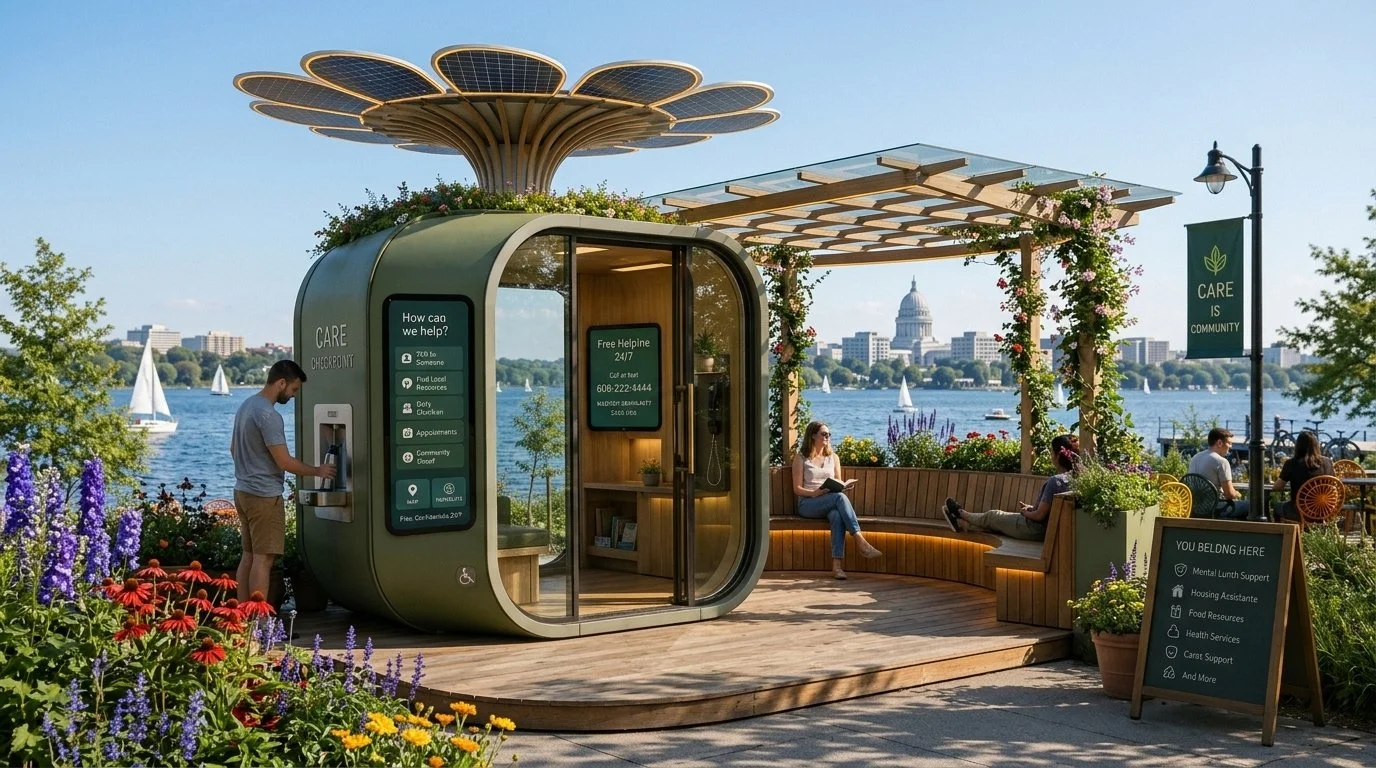
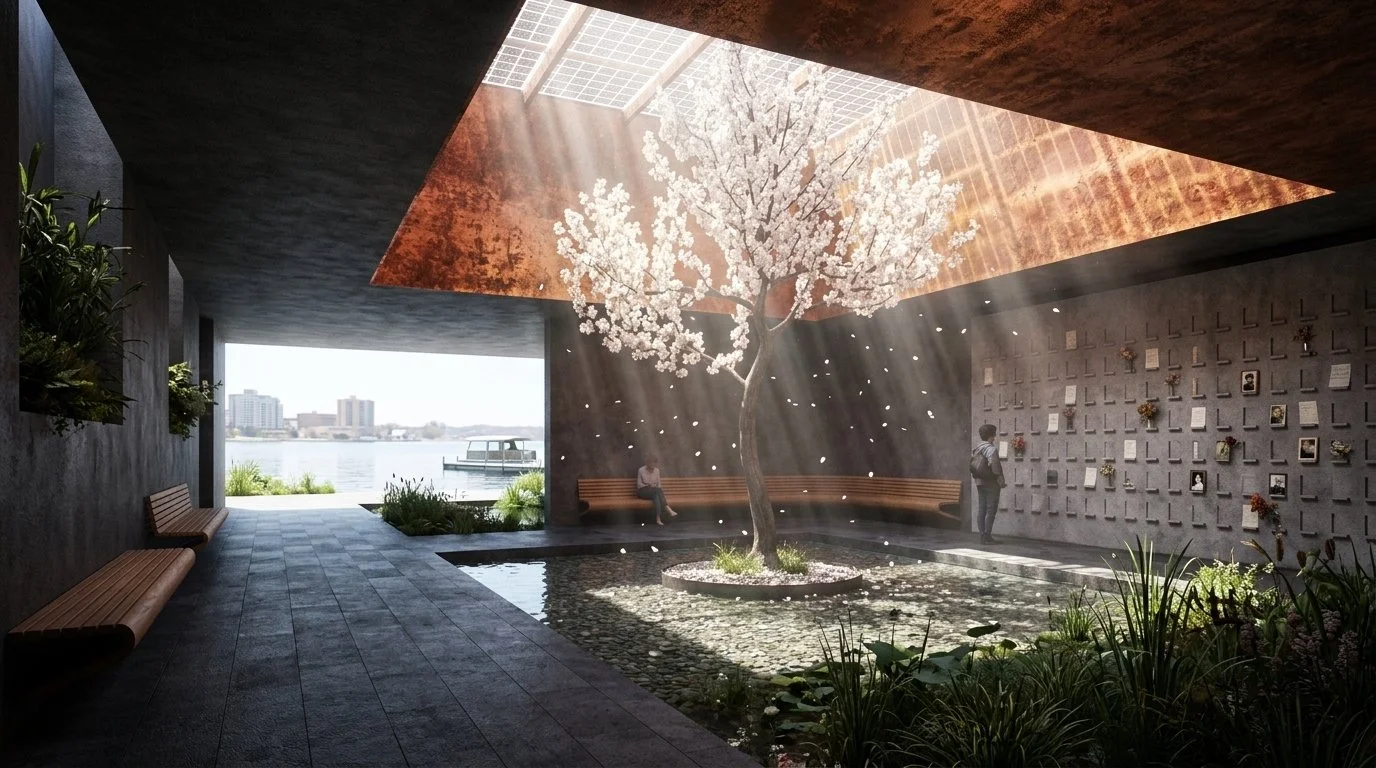
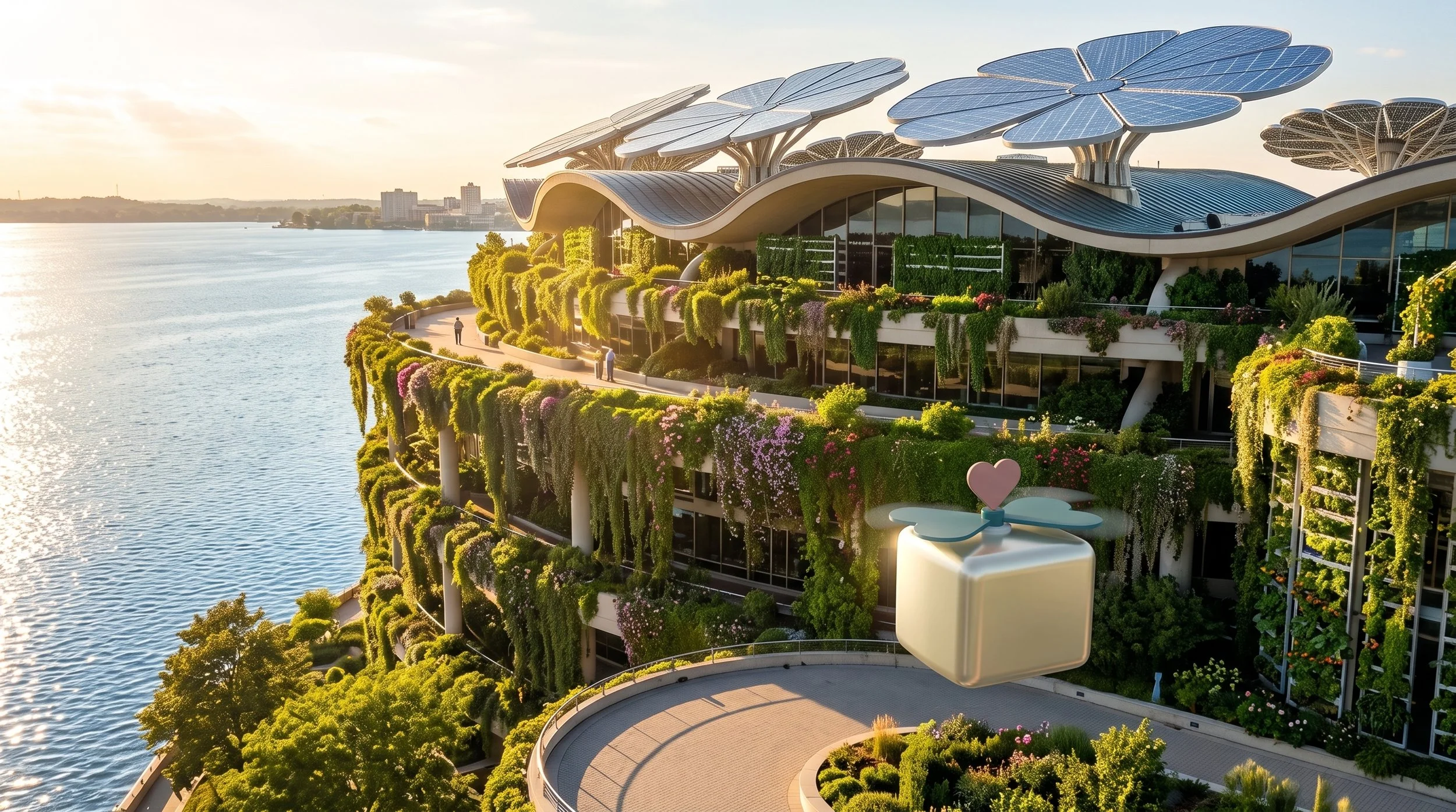
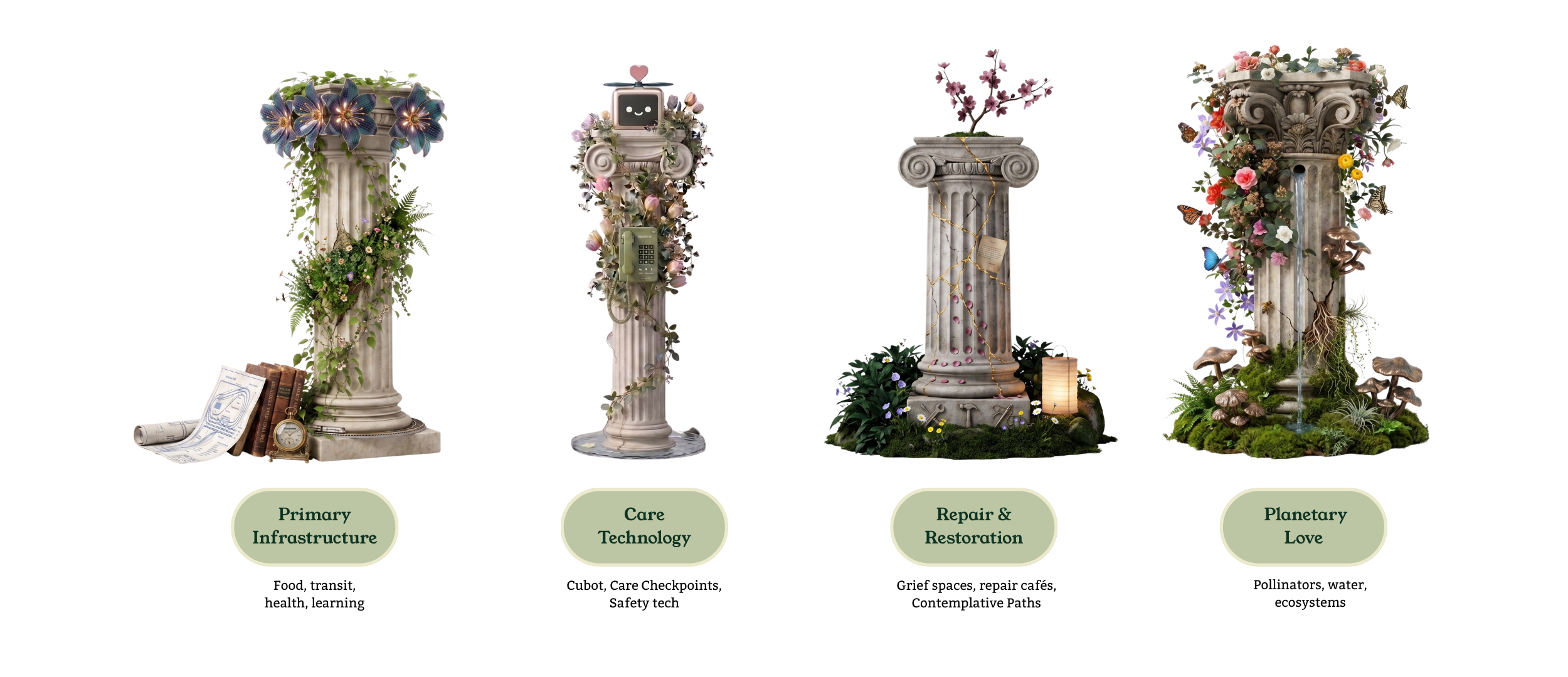
We broke love down into four things a city, or a life, can't thrive without: Primary Infrastructure (transit, healthcare, community spaces), Care Technologies (Cubot and the systems around it), Rituals & Repair (grief spaces, repair cafés, contemplative paths), and Planetary Love (pollinator networks, regenerative buildings, water stewardship). Cubot became the connective thread across all four, an evolution of Cupid whose role isn't limited to a single grand gesture, but to being there for you through thick and thin: a note delivered, a hand held through nerves, a quiet nudge to breathe before the day gets too loud.
The Outcome
We had planned an in-person exhibition, but a campus building closure (a broken chilled water line took the venue offline days before opening) forced a last-minute pivot. Instead, we brought the full project to life as a virtual exhibition, documented on a Miro board, alongside a Figma prototype covering each of the four infrastructure pillars, a dedicated Cubot page, and an embedded trailer for Cupid on Earth.
Design Process
Concept Development
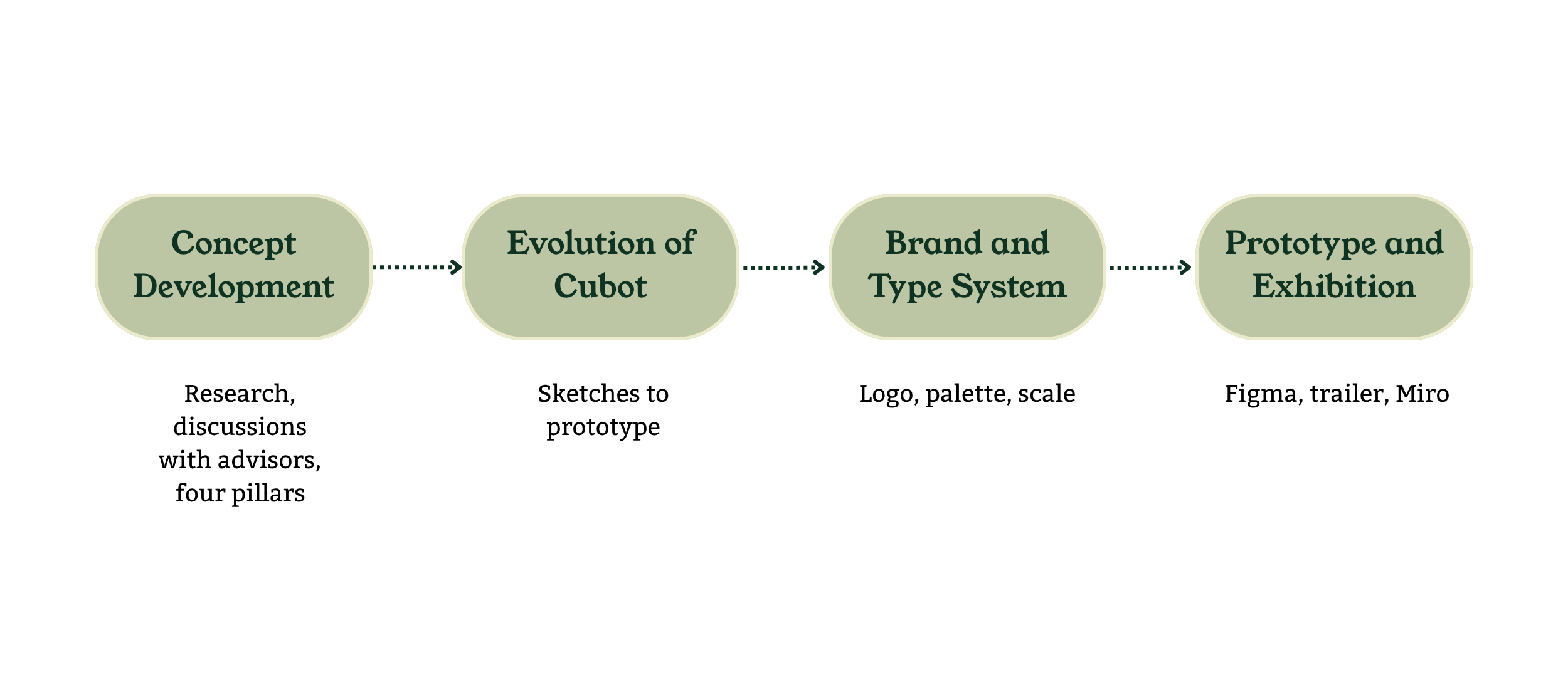
Our research spanned Greek, Arabic, and Urdu frameworks for love, alongside Wisconsin civic history and speculative design fiction, to ground the four infrastructure pillars in something real rather than purely conceptual. We also went out and asked people directly what love meant to them, informal conversations that shaped how human the system needed to feel. We presented early ideas to PBS Wisconsin and worked through several rounds of discussion with our advisors, pressure-testing the concept each time: where the system could realistically start, who would actually implement it, and how Cubot could build trust with people rather than just automate care for them.
Evolution of Cubot
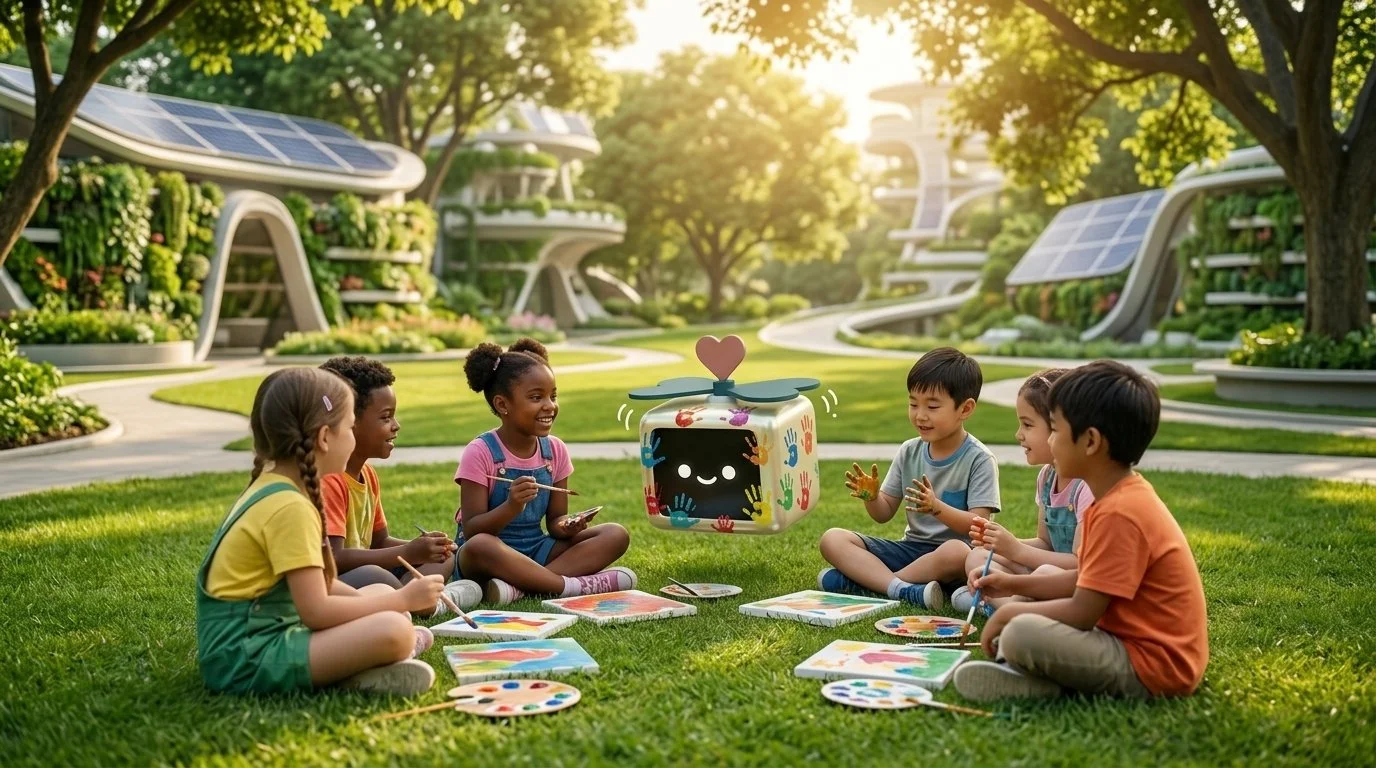
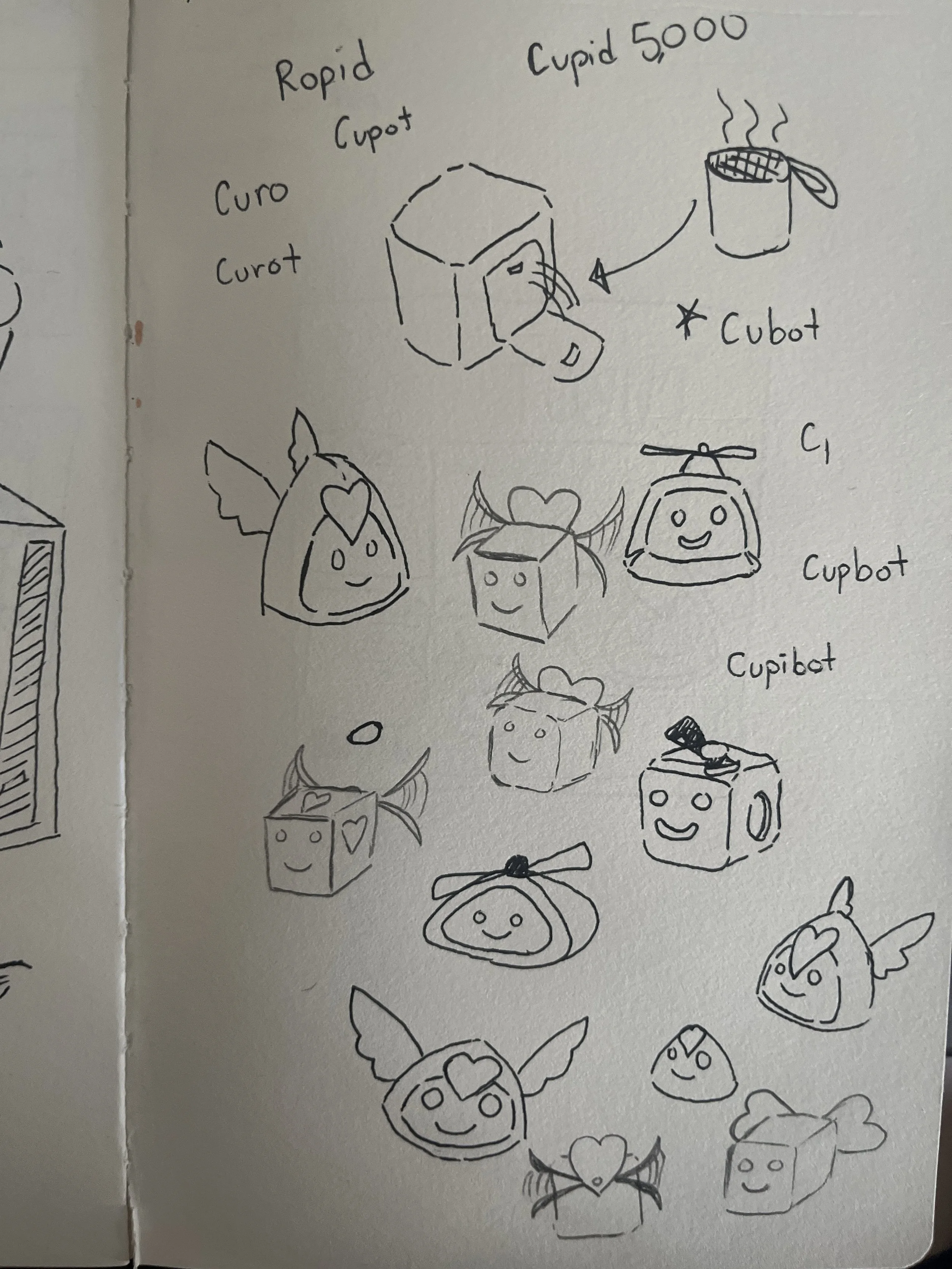
Cubot never really stopped changing, we kept testing and reworking it all the way to the end. Early concepts leaned directly on Cupid's mythology, then moved through a wristband signal-relay system, then a mutual embrace gesture, before landing on the final version: a small, present, pet-like companion. We modeled it in Blender, a rounded body, a heart-topped propeller, and an expressive face, then built a physical prototype and brought it out into real Madison locations to see how people actually responded to it in the world. Each iteration was really a question about consent, how does a wellbeing system ask permission instead of assuming it.
Brand & Type System
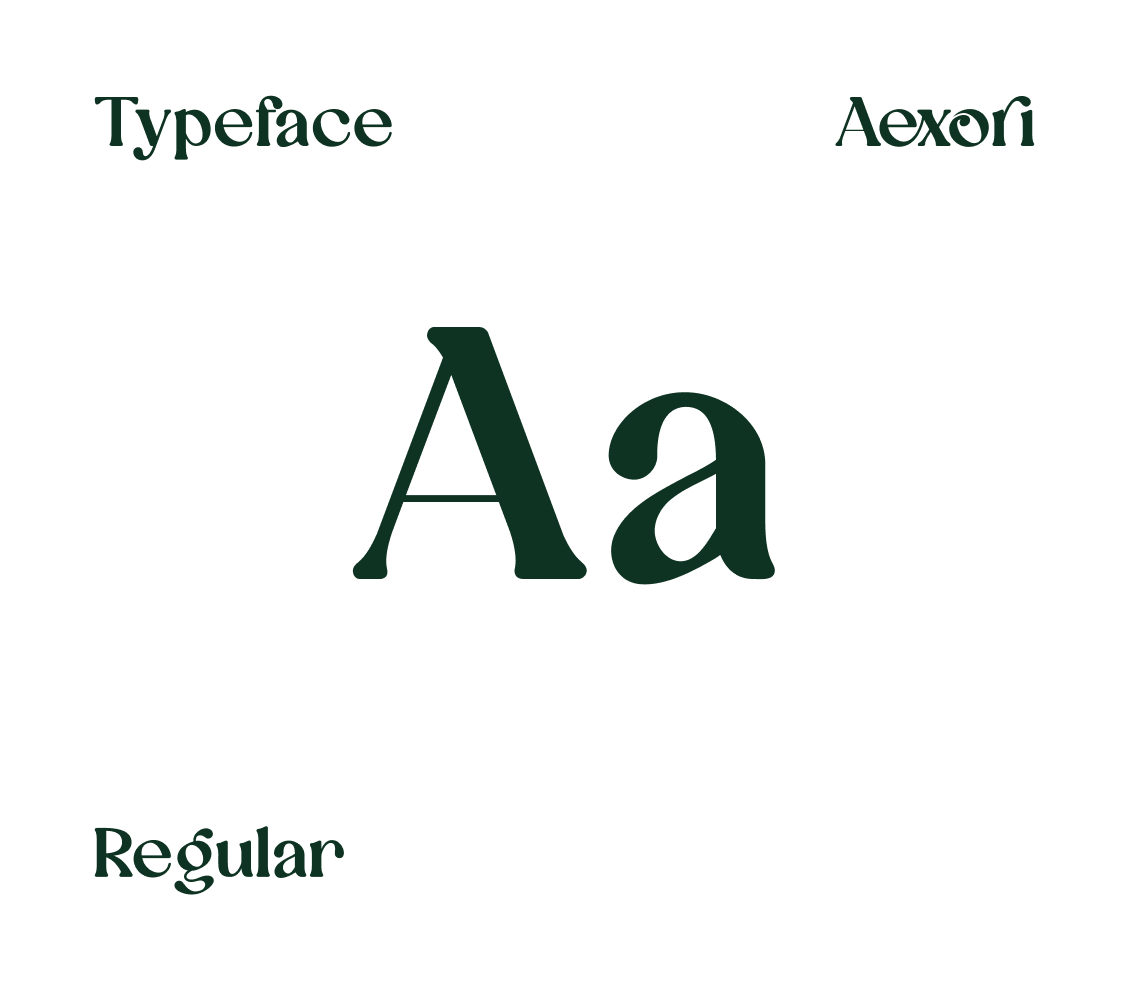
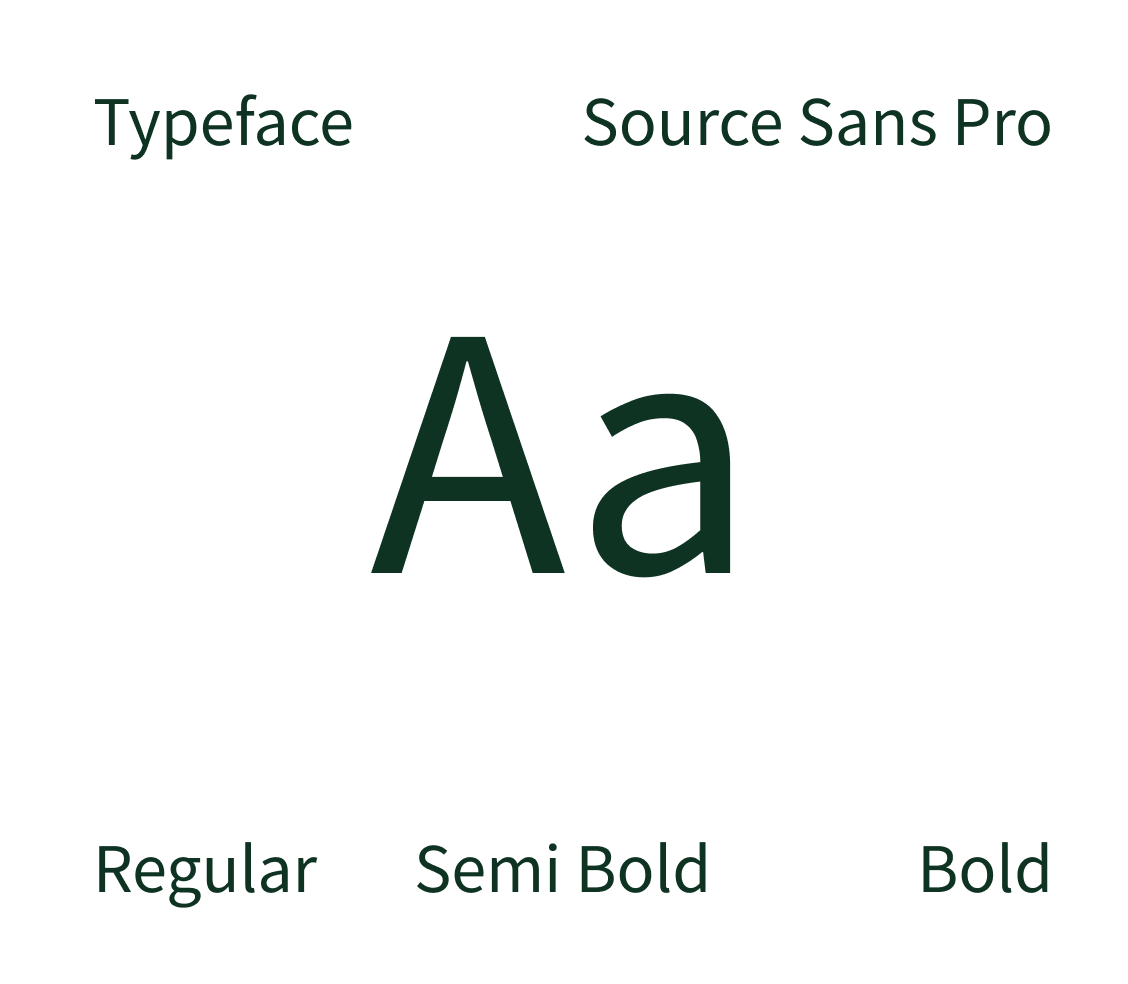
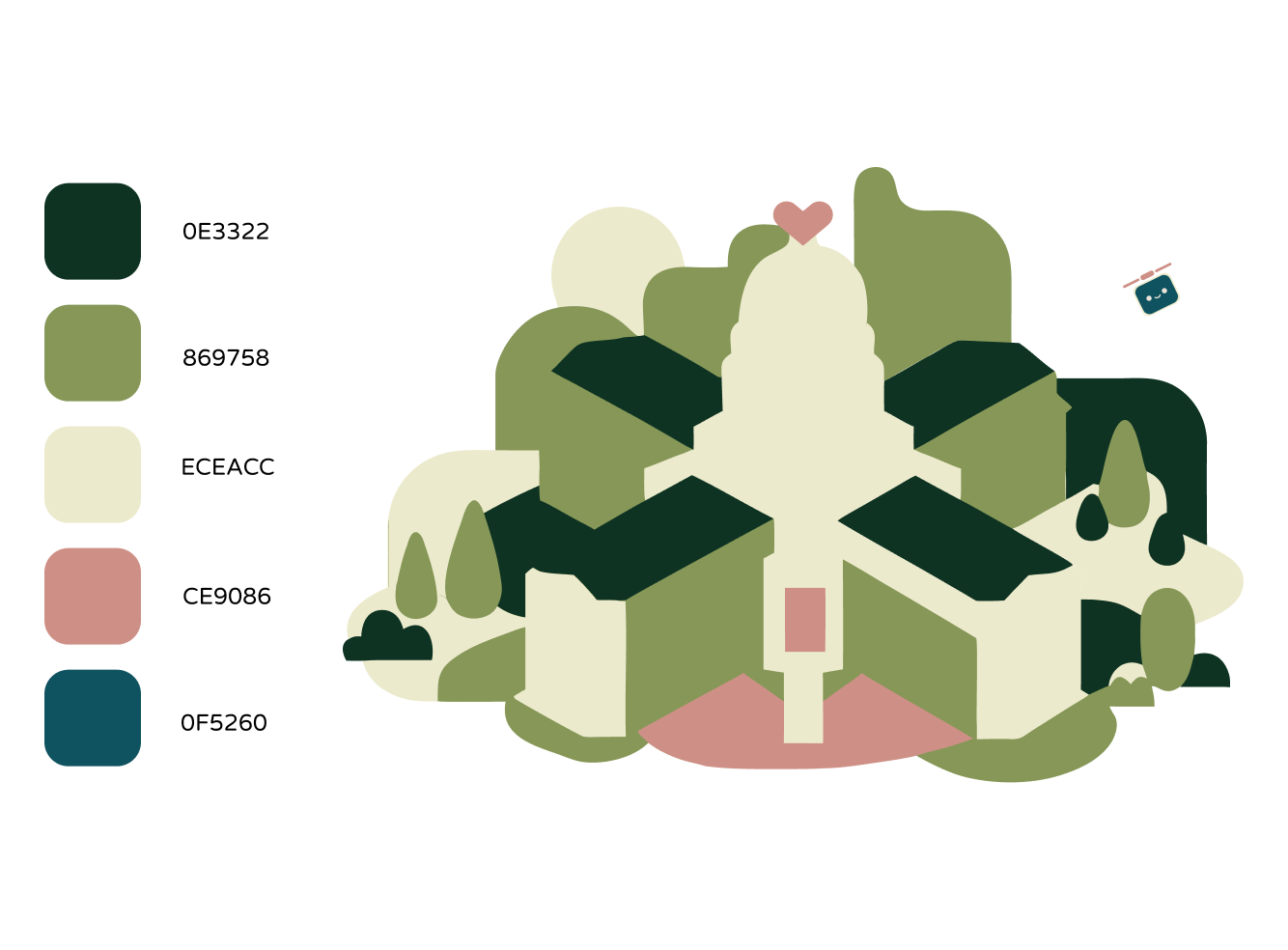
We went through several rounds of experimentation before the identity clicked. The direction that finally worked landed on what we started calling "hopecore," warm, tender, a little handmade, instead of the sleek, sterile look most civic tech defaults to. That instinct shaped the final identity: consistent character and environment imagery, a five-color palette, dark green, sage, cream, coral, and deep teal, and a desktop type scale built for accessibility.
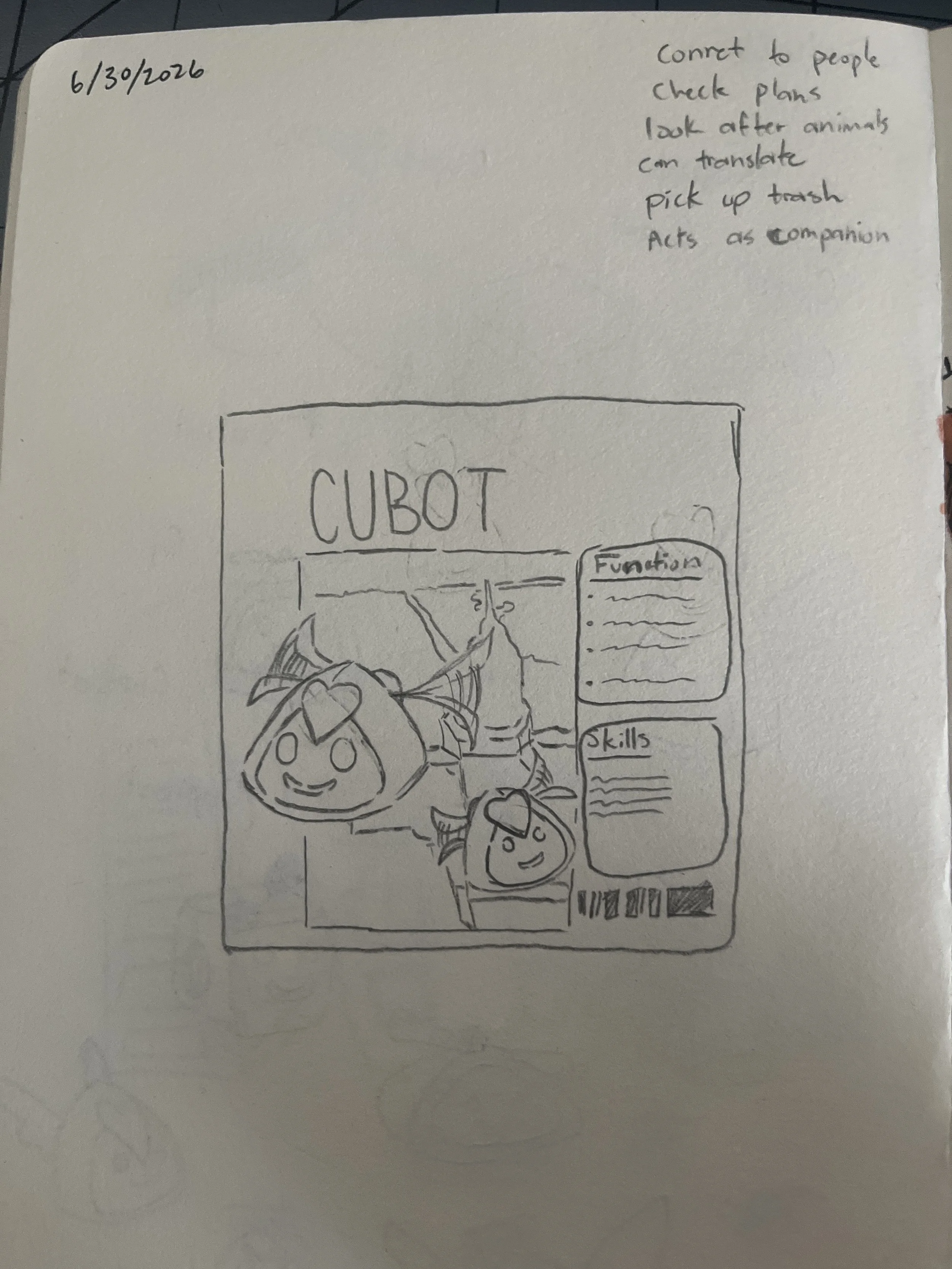
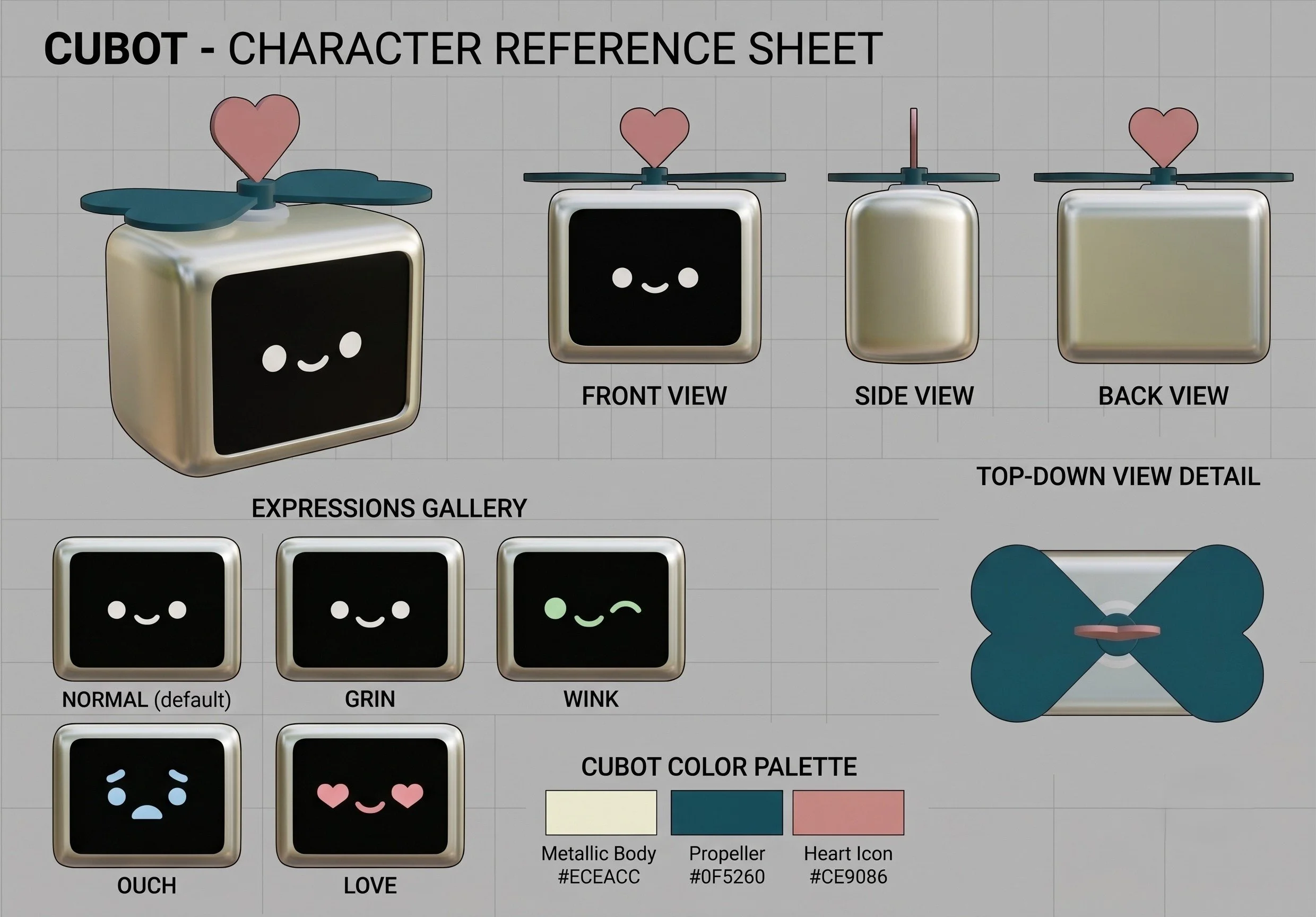
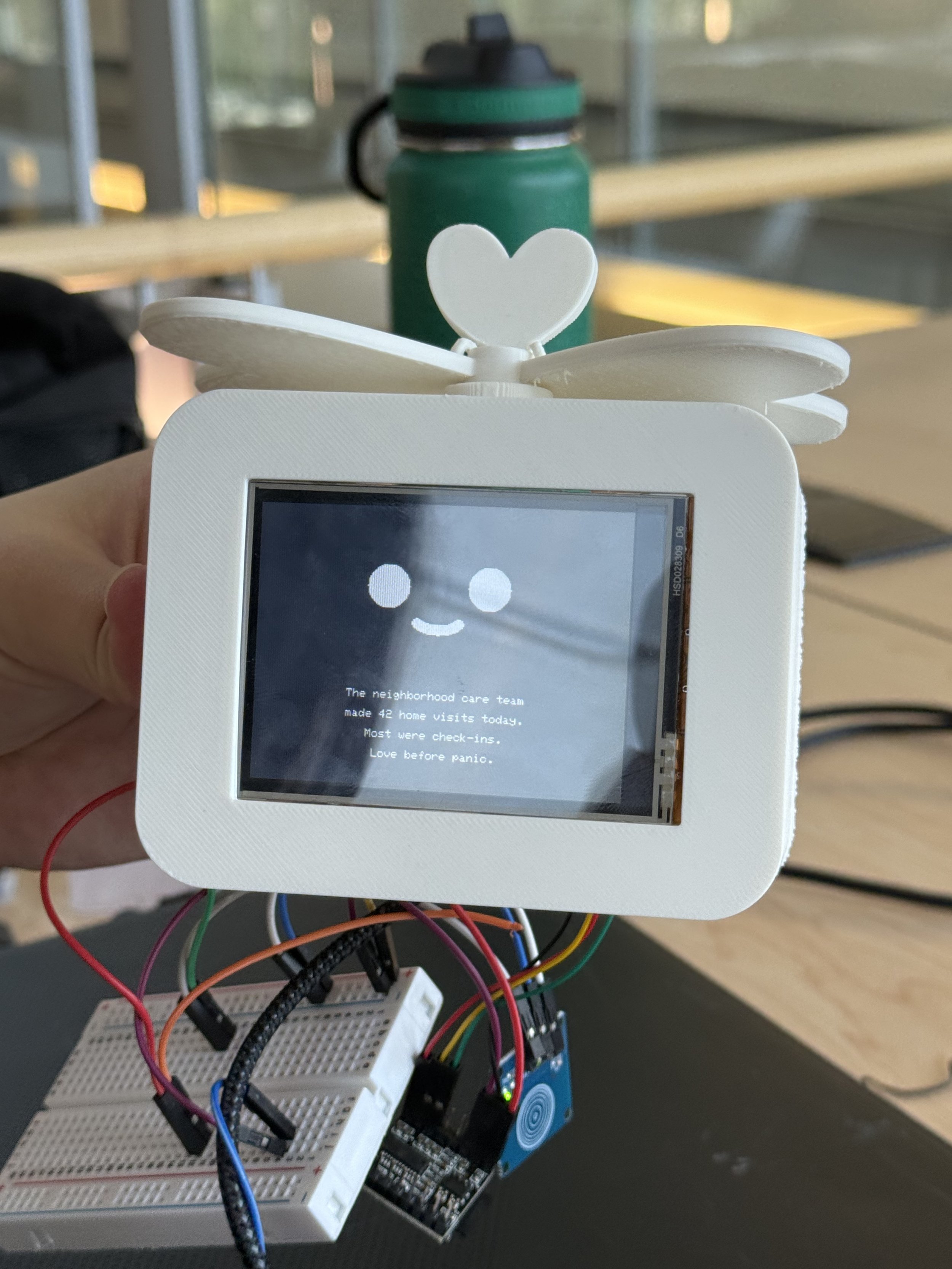
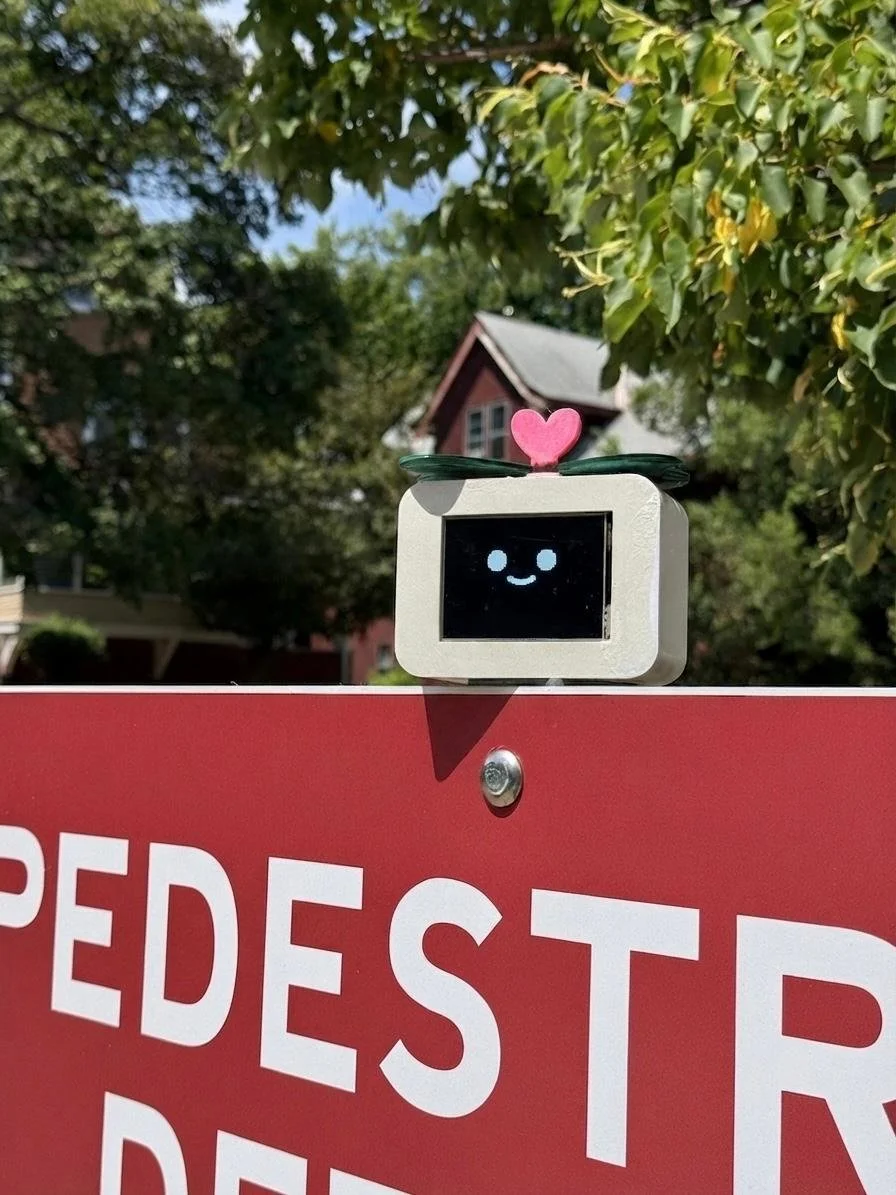
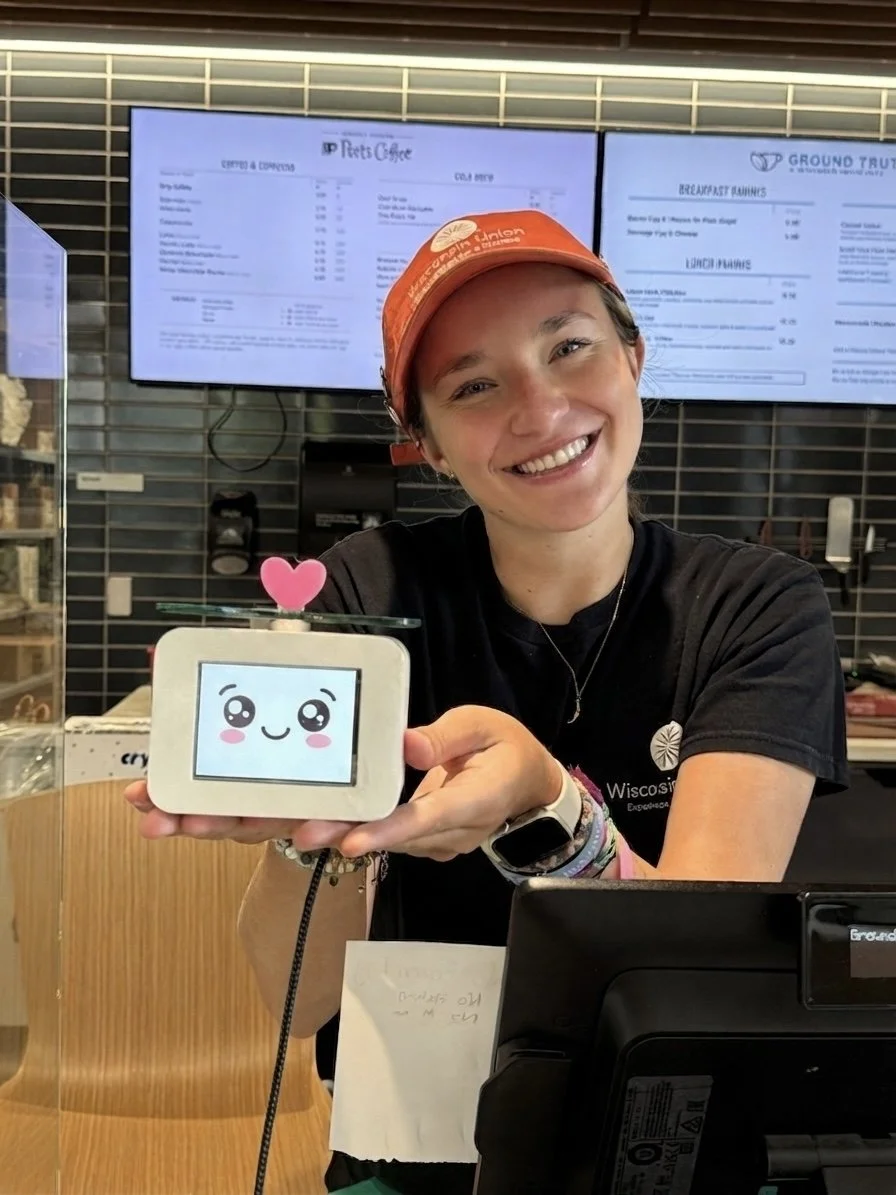
From there, Cubot stopped being a screen full of renders and became something we could actually hold. We 3D printed the body, the rounded shell, the heart-topped propeller, in pieces, then wired a small embedded display into a breadboard prototype so Cubot could actually show its face and short messages rather than just gesture at them in a mockup. Coding the screen meant deciding what Cubot says and how it looks in the moment someone actually meets it, not just what it looks like sitting still. Once it worked, we took it out into real Madison locations, a pedestrian crossing, a coffee shop counter, to see how people responded to something this small and expressive showing up in their actual day.
The Figma prototype covers each infrastructure pillar as its own page, a dedicated Cubot page, and features the C.O.E. trailer. When the physical exhibition venue closed, we documented the full project, world-building, environment scenes, and Cubot's evolution, on a Miro board instead, so the work still lived somewhere people could walk through it.
The Prototype
Bringing 2046 to life
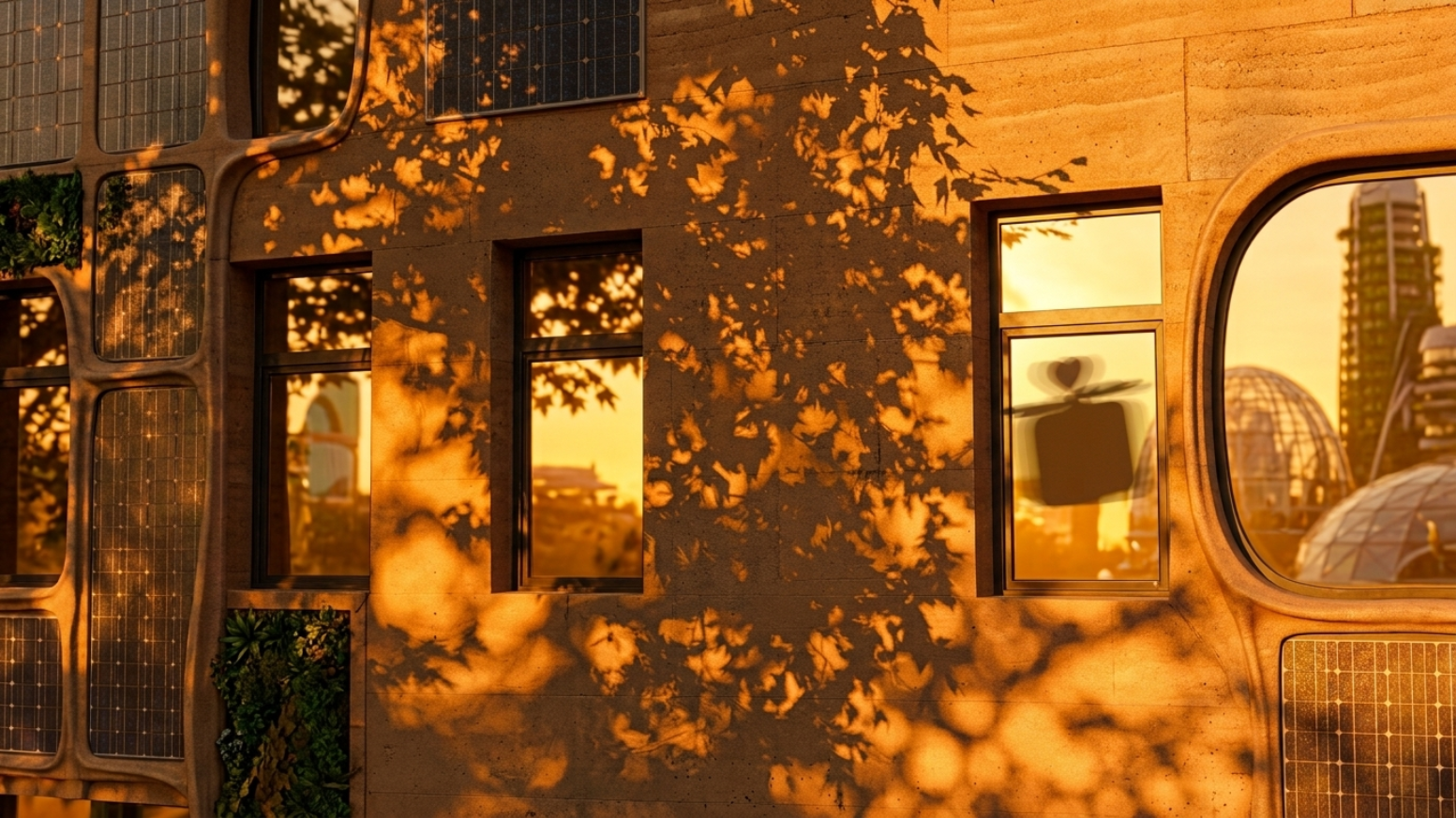
To visualize Wisconsin in 2046 at a scale we couldn't otherwise reach for a class project, we storyboarded a full narrative sequence ourselves and used Google Flow to generate the environment footage from those proposals, then cut it into a cinematic trailer with a voiceover script done by our peer Mya Lovett. The concept sketches, storyboard and gesture design were all ours; Google Flow was the production tool we directed to render it.