How Do We Love?
A civic infrastructure system where love isn’t left to chance, it’s designed, built, and maintained like a public utility.
The Challenge
This was a speculative design capstone project, and the brief was to imagine a hopeful future for Wisconsin, one that felt possible rather than utopian. Each team was handed a different lens into that future, and ours was a question we couldn’t stop asking each other afterward: how do we love? Not in theory, in practice, in the everyday. In traffic, in grief, in the small moments no one designs for. We realized love isn’t something that just happens to us, it’s something a city could build and maintain the way it does transit or water: on purpose, for everyone. The challenge was figuring out what that civic infrastructure would actually look like, which became Cupid on Earth (C.O.E.), with Cubot at its center: a small companion who delivers that care through consent rather than surveillance.
Design Process
Concept Development
Research, discussions with advisors, four pillars
Evolution of Cubot
Sketches to prototype
Brand and Type System
Logo, palette, scale
Prototype and Exhibition
Figma, trailer, Miro
Four Pillars of Love
Our research spanned Greek, Arabic, and Urdu frameworks for love, alongside Wisconsin civic history and speculative design fiction, to ground the four infrastructure pillars in something real rather than purely conceptual. We also went out and asked people directly what love meant to them, informal conversations that shaped how human the system needed to feel. We presented early ideas to PBS Wisconsin and worked through several rounds of discussion with our advisors, pressure-testing the concept each time: where the system could realistically start, who would actually implement it, and how Cubot could build trust with people rather than just automate care for them.

Food, transit, health, learning
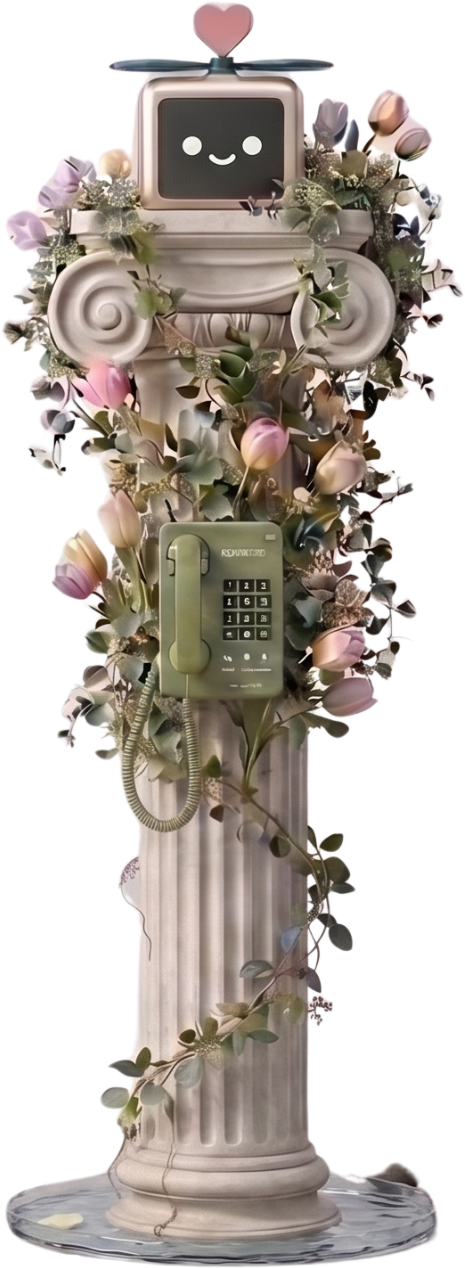
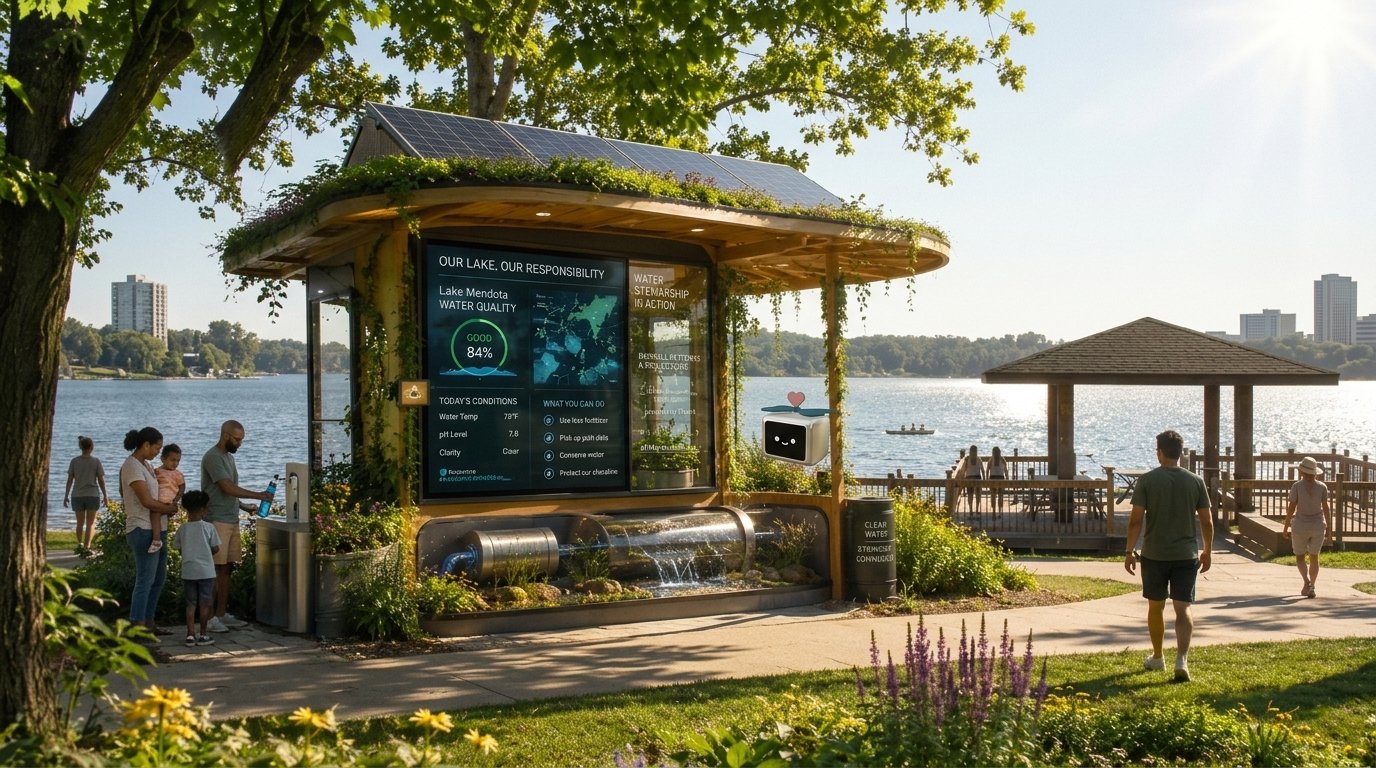
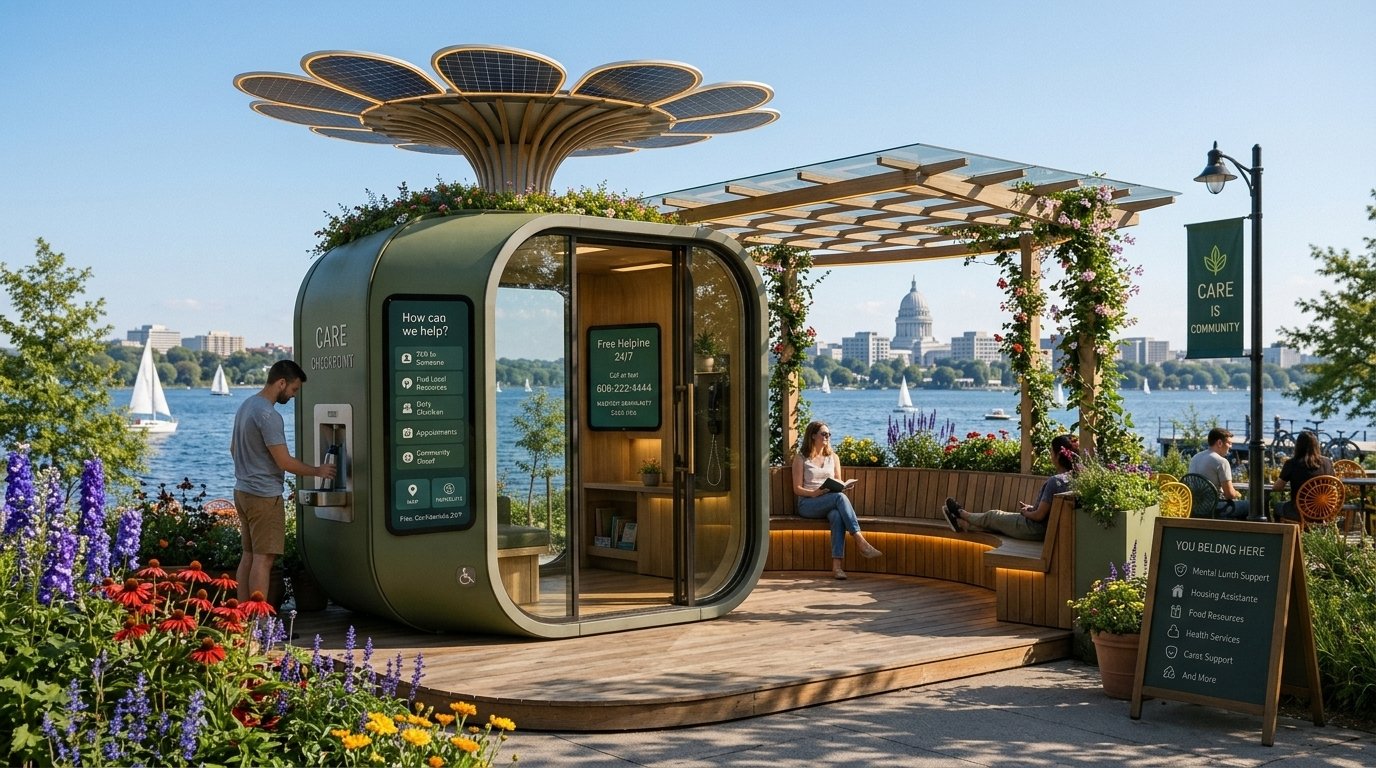
Cubot, Care Checkpoints, Safety tech

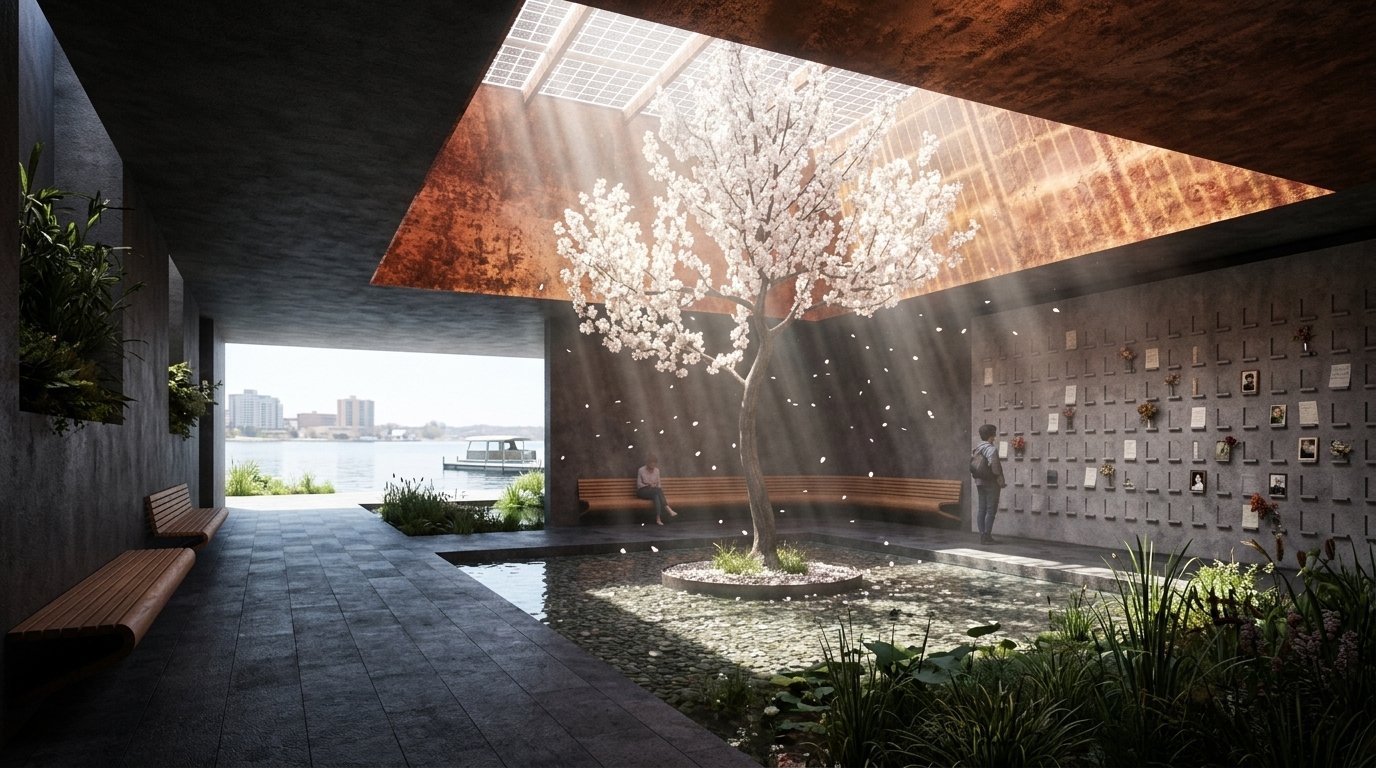
Grief spaces, repair cafés, contemplative paths
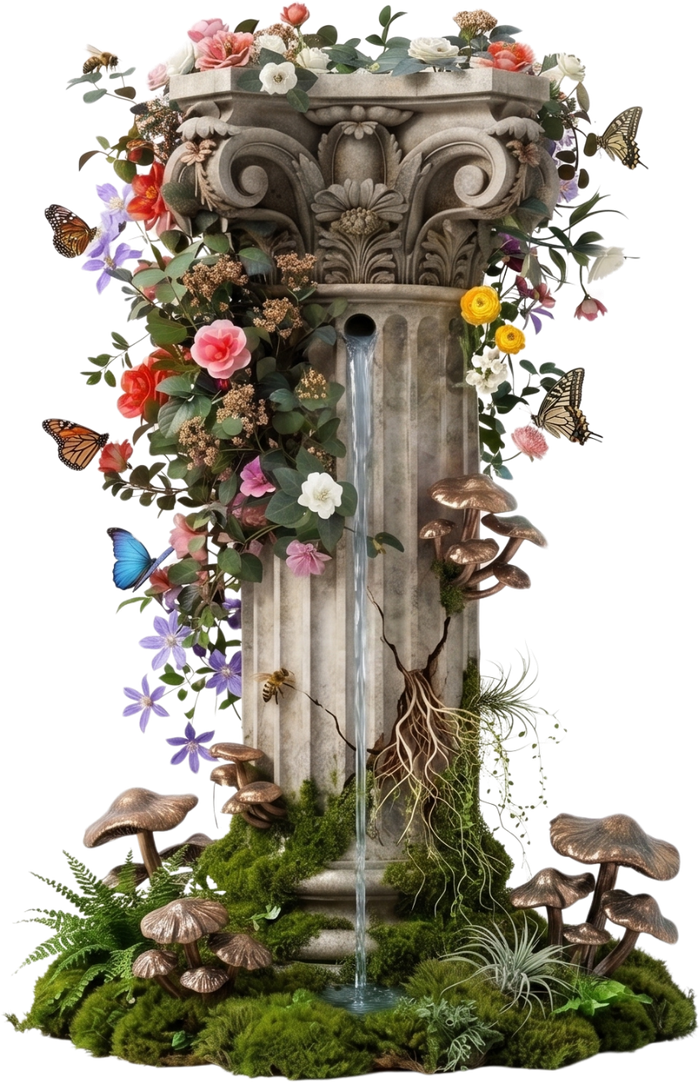
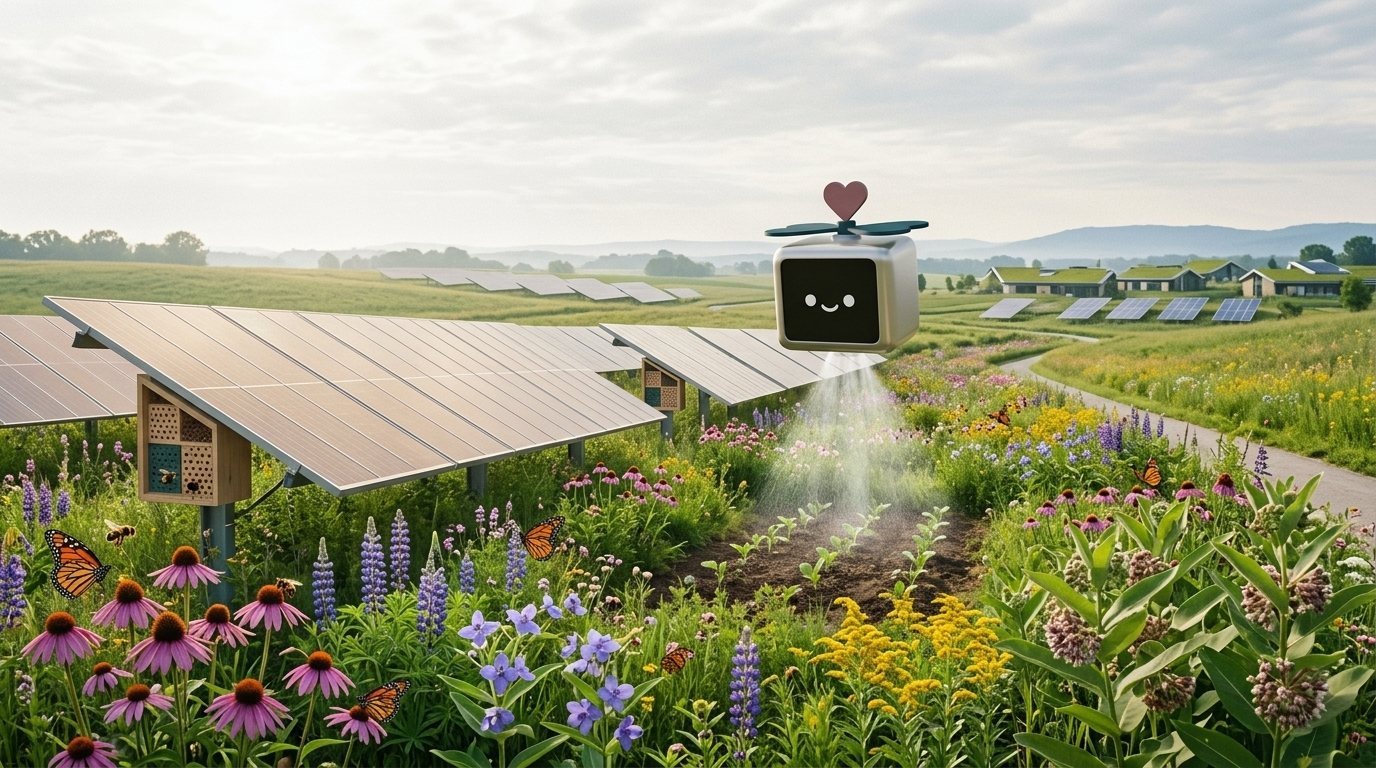
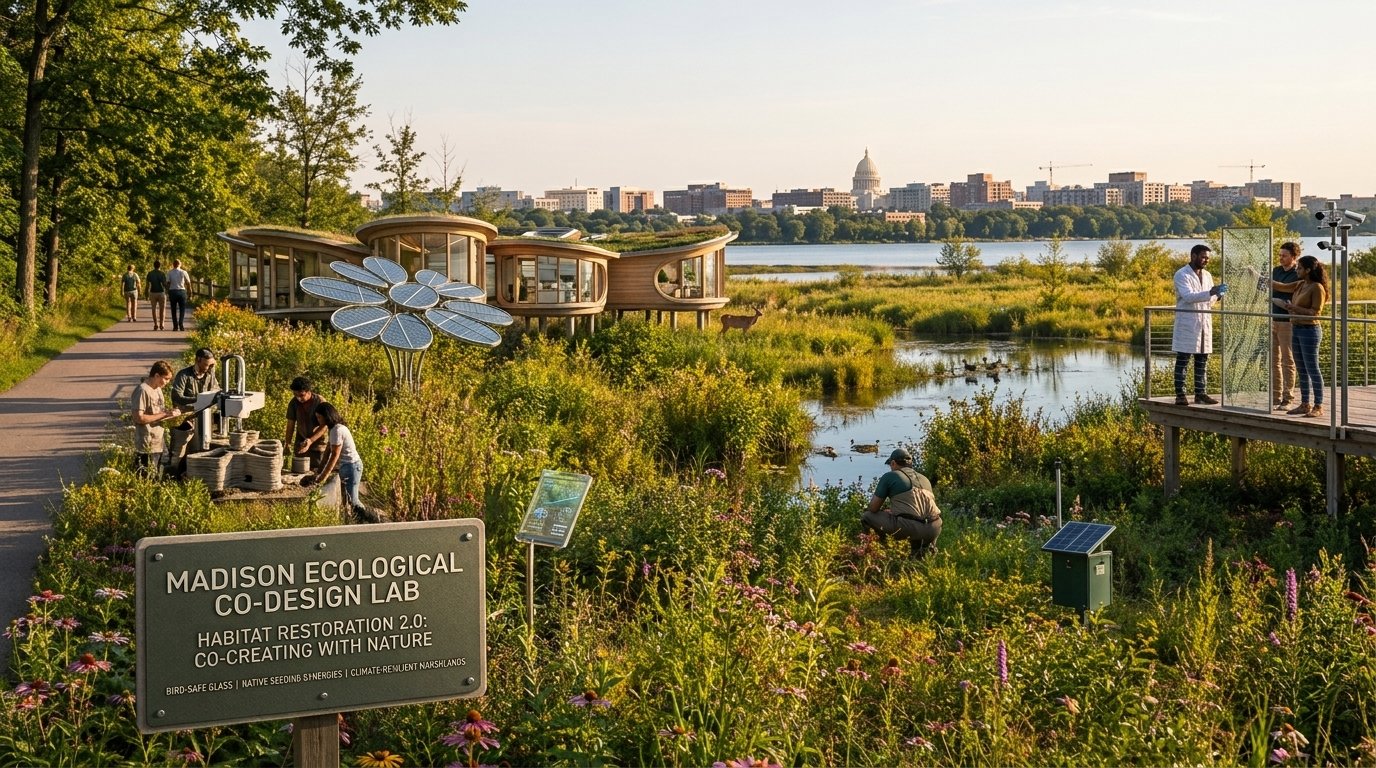
Pollinators, water, ecosystems
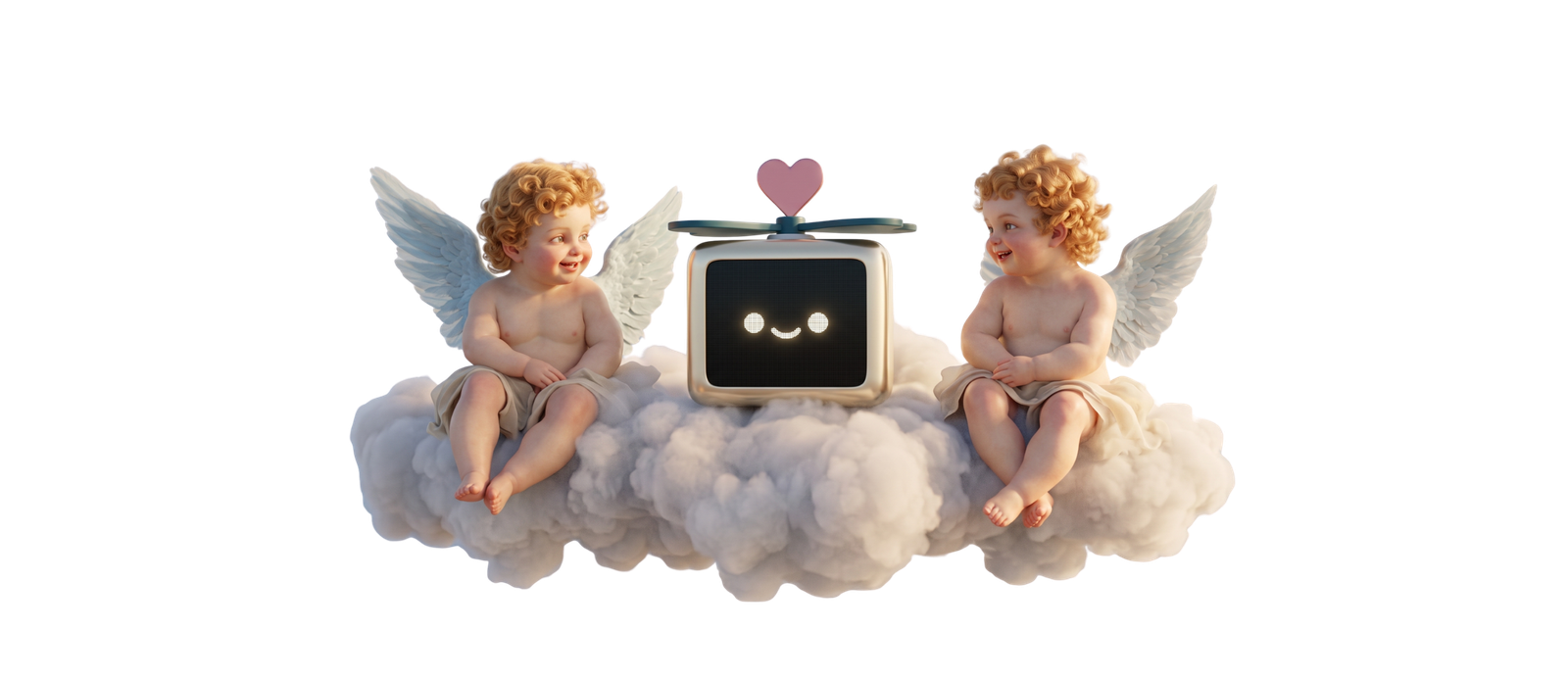
Evolution of Cubot
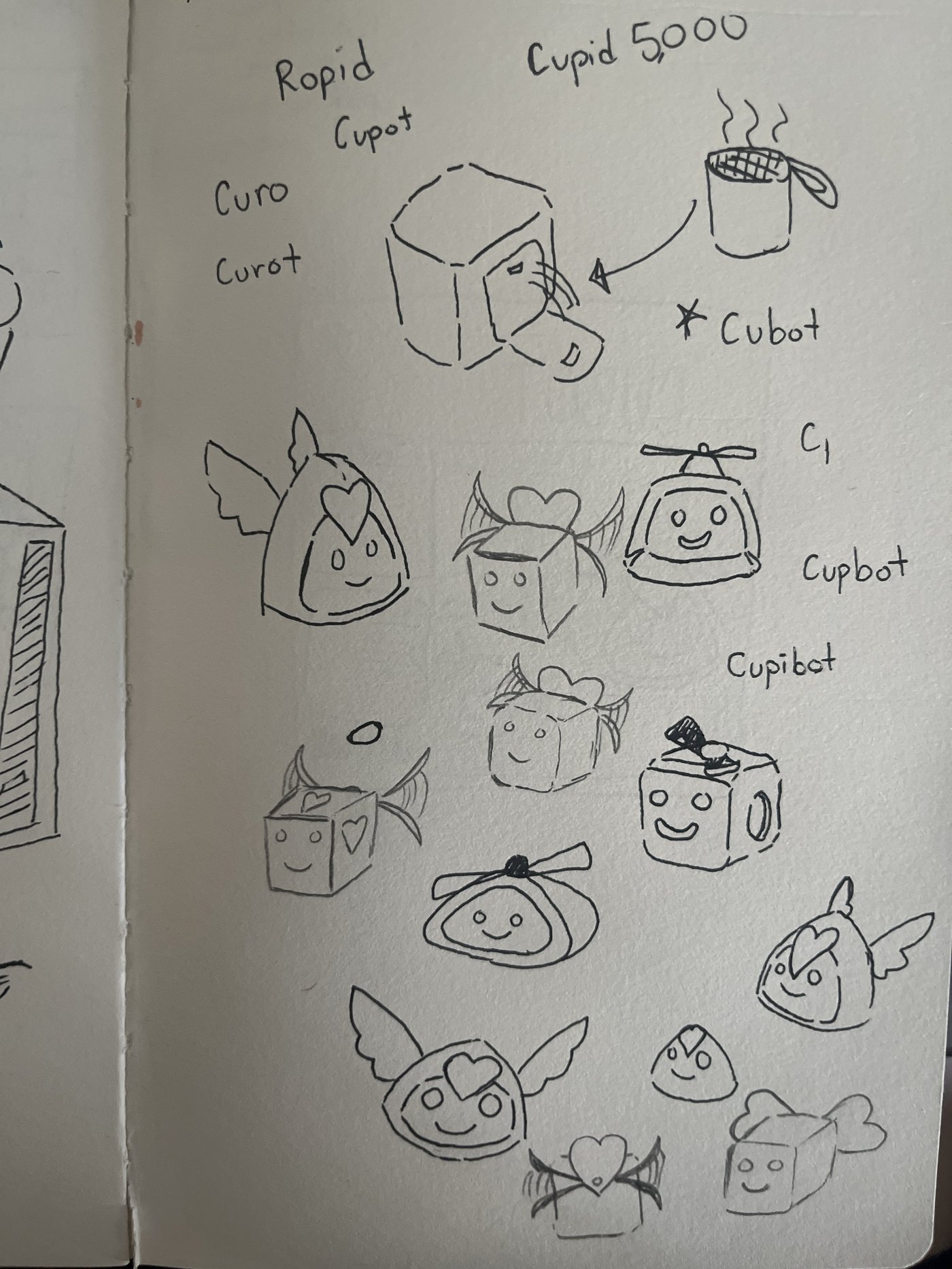
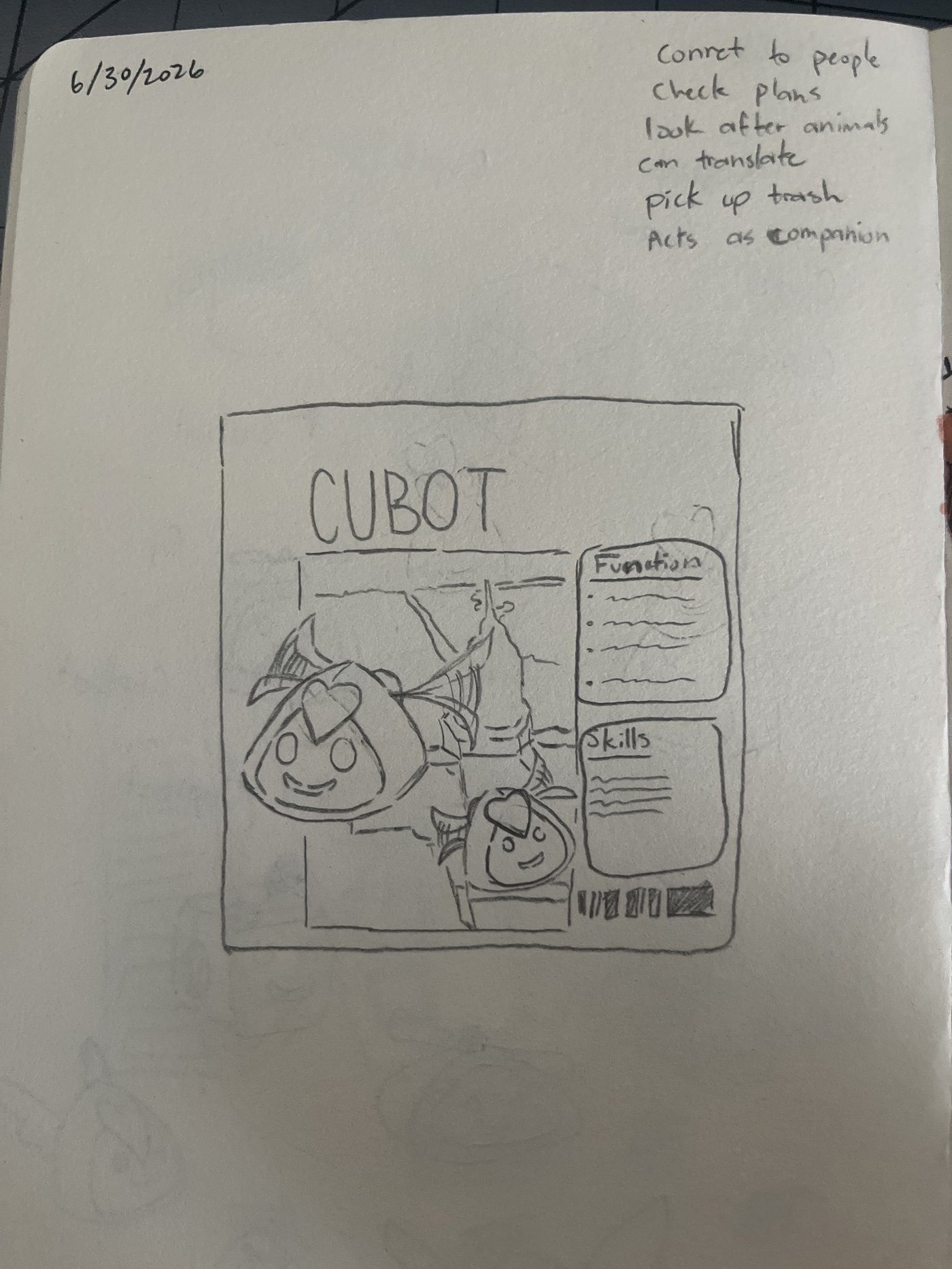
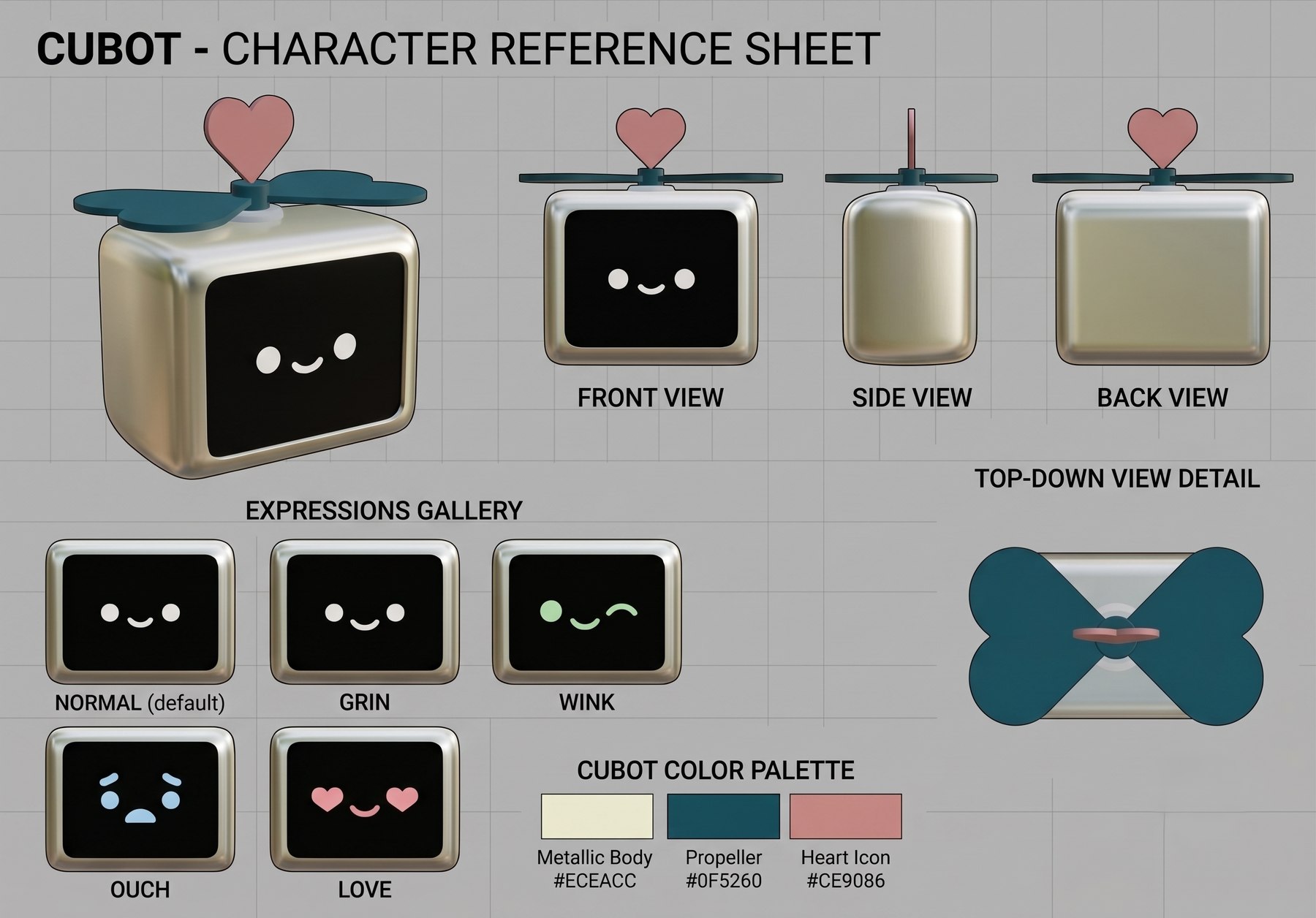
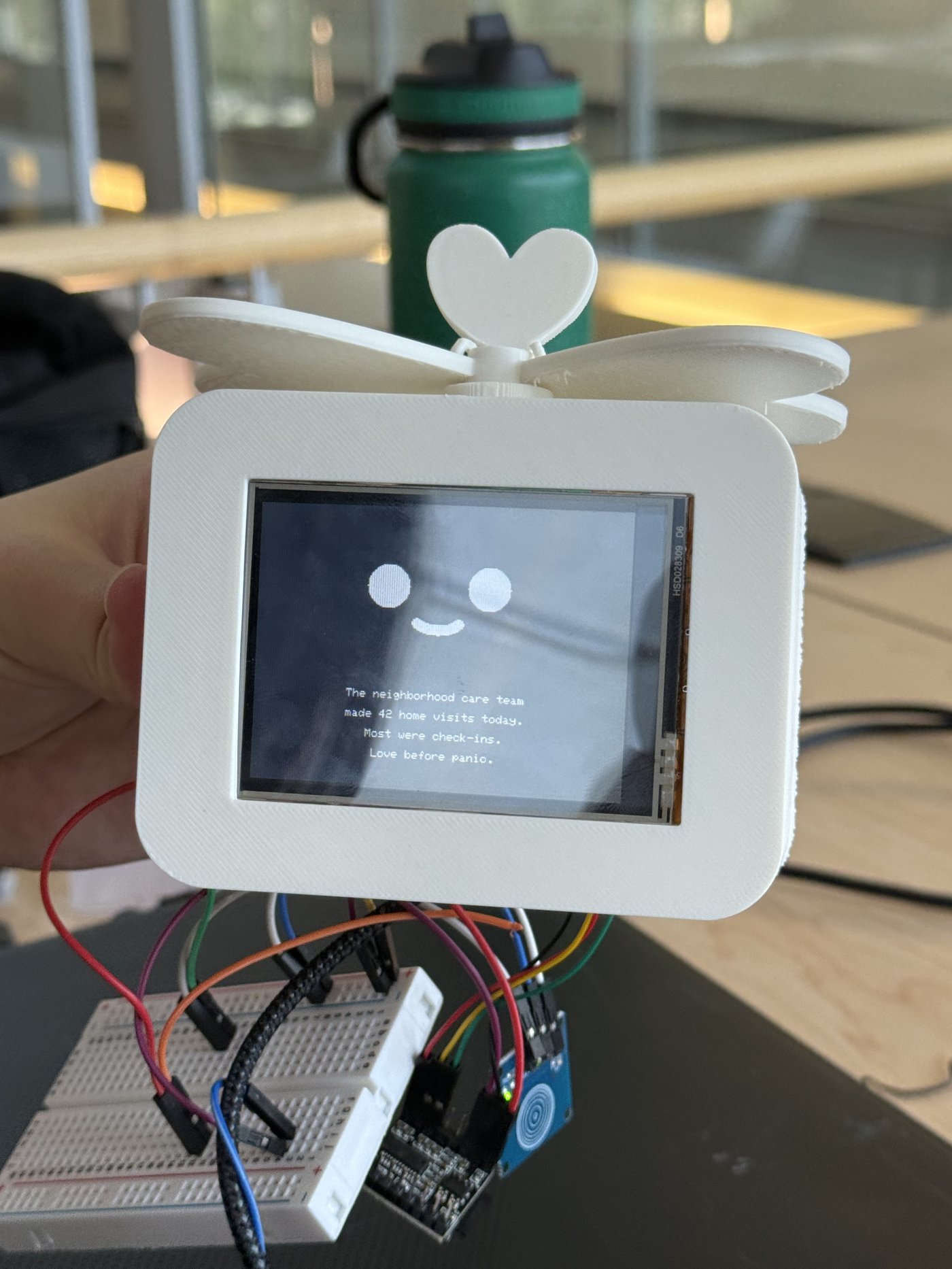
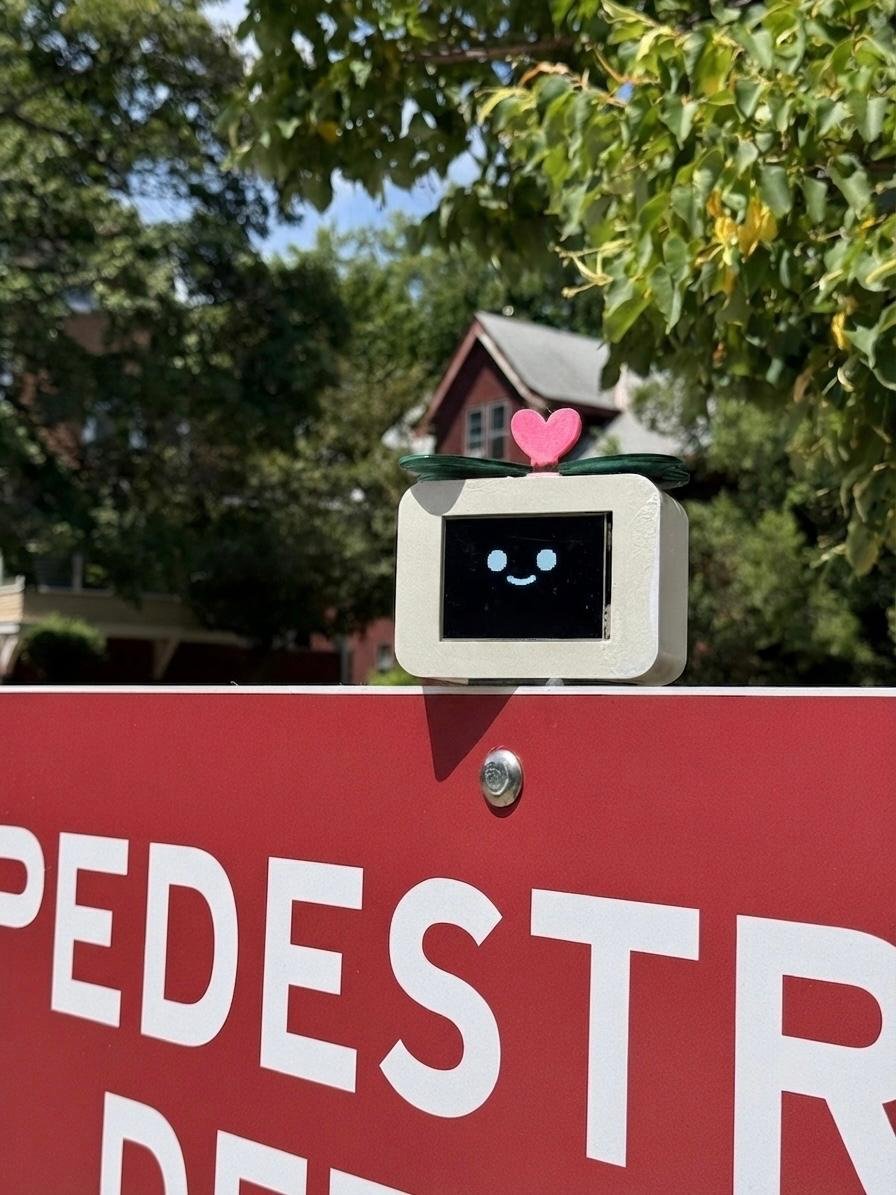
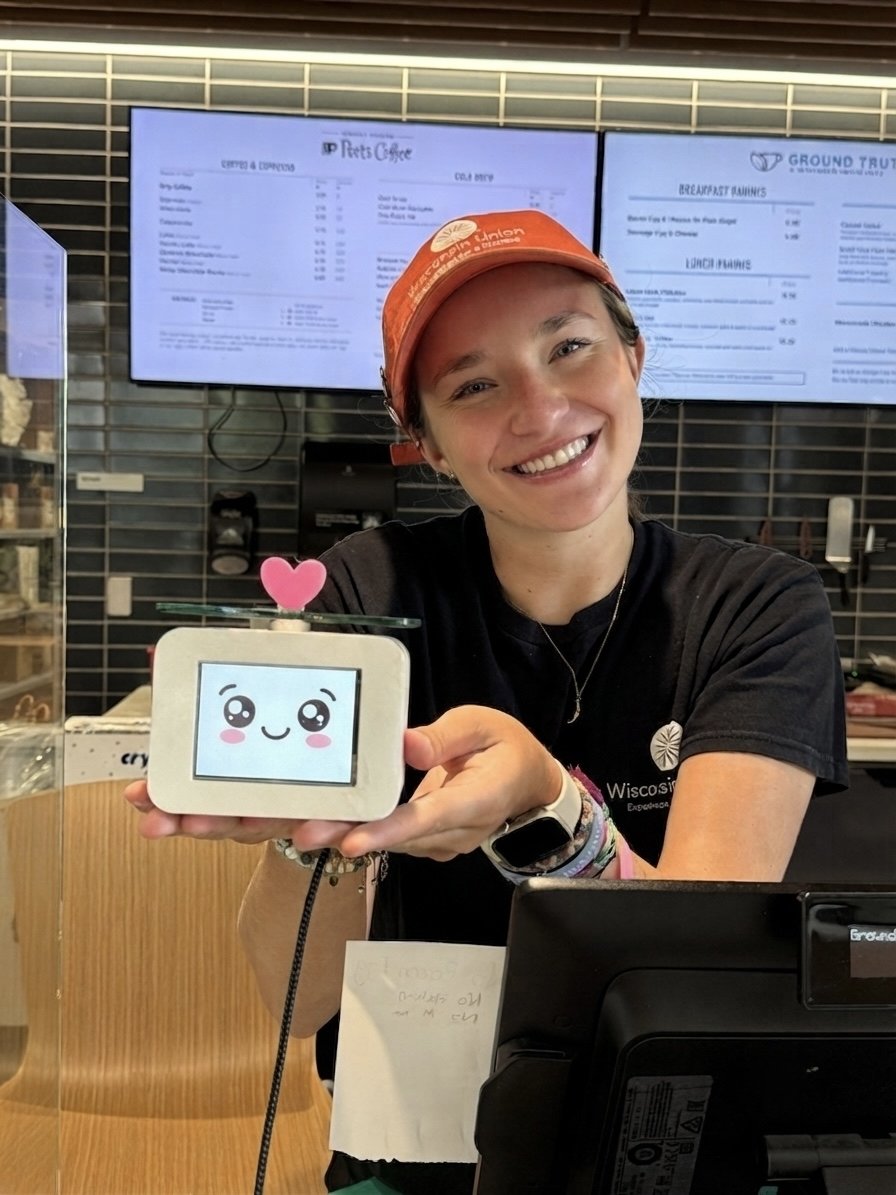
Cubot never really stopped changing, we kept testing and reworking it all the way to the end. Early concepts leaned directly on Cupid’s mythology, then moved through a wristband signal-relay system, then a mutual embrace gesture, before landing on the final version: a small, present, pet-like companion. We modeled it in Blender, a rounded body, a heart-topped propeller, and an expressive face, then built a physical prototype and brought it out into real Madison locations to see how people actually responded to it in the world. Each iteration was really a question about consent, how does a wellbeing system ask permission instead of assuming it.
Design choice: Cubot reads as a consent-based companion, not a surveillance tool, small, present, and pet-like rather than watchful.
Brand & Type System
We went through several rounds of experimentation before the identity clicked. The direction that finally worked landed on what we started calling “hopecore,” warm, tender, a little handmade, instead of the sleek, sterile look most civic tech defaults to. That instinct shaped the final identity: consistent character and environment imagery, a five-color palette, dark green, sage, cream, coral, and deep teal, and a desktop type scale built for accessibility.
The Outcome
We had planned an in-person exhibition, but a campus building closure (a broken chilled water line took the venue offline days before opening) forced a last-minute pivot. Instead, we brought the full project to life as a virtual exhibition, documented on a Miro board, alongside a Figma prototype covering each of the four infrastructure pillars, a dedicated Cubot page, and an embedded trailer for Cupid on Earth.
Gallery
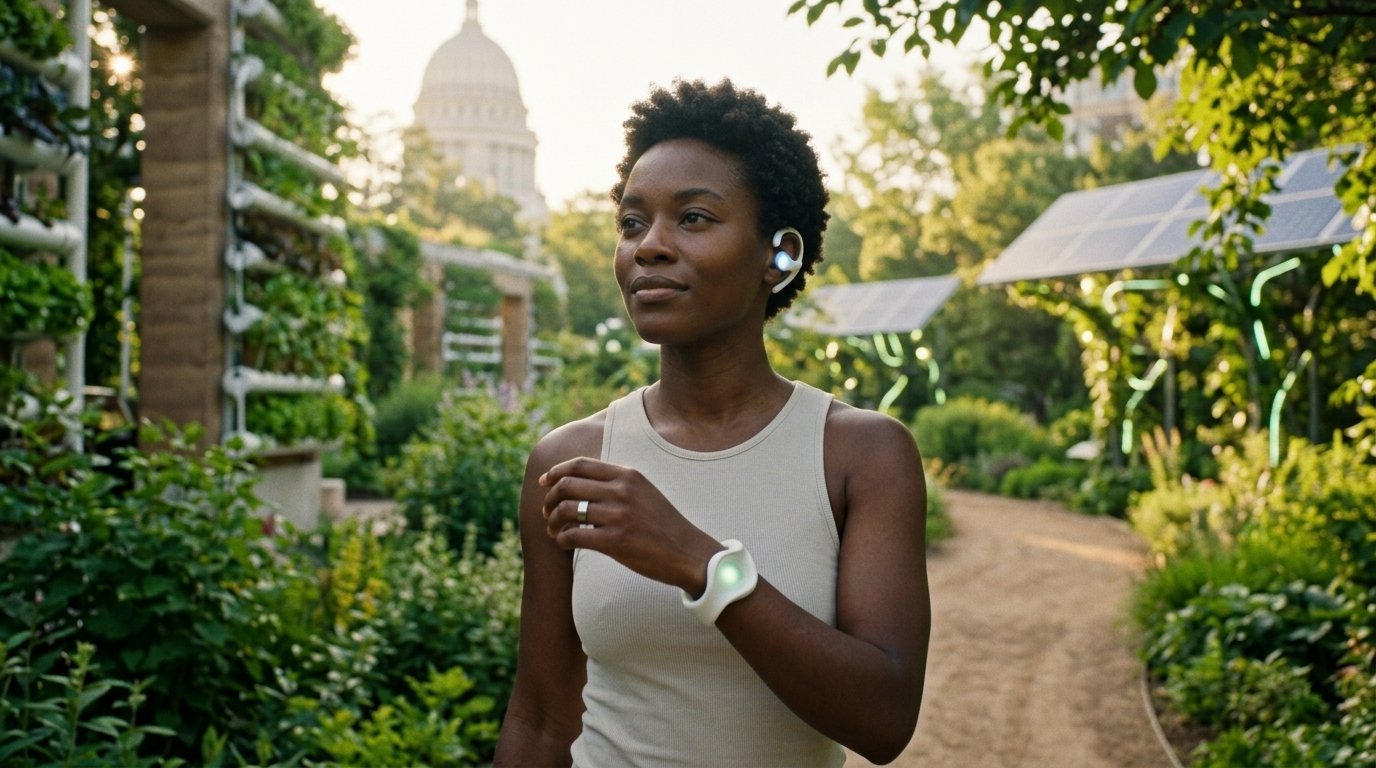
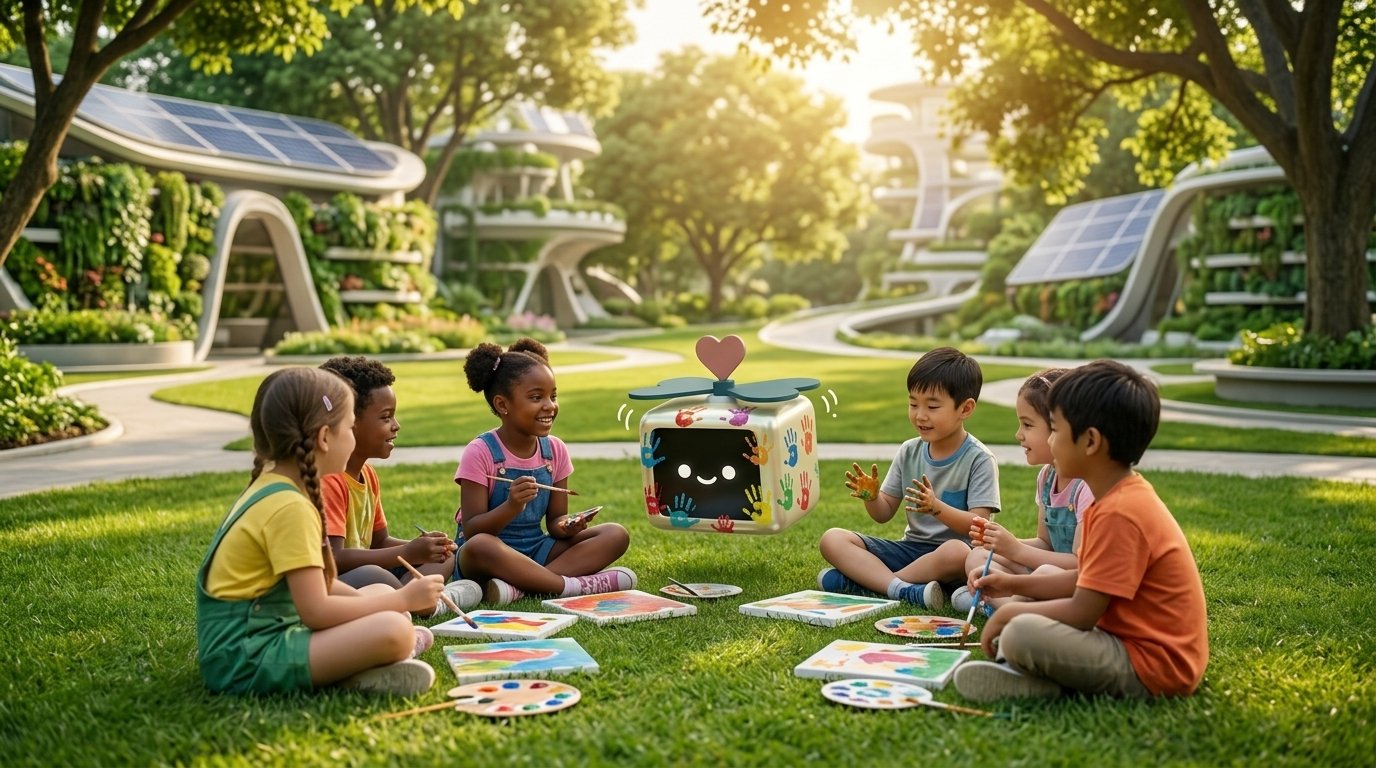
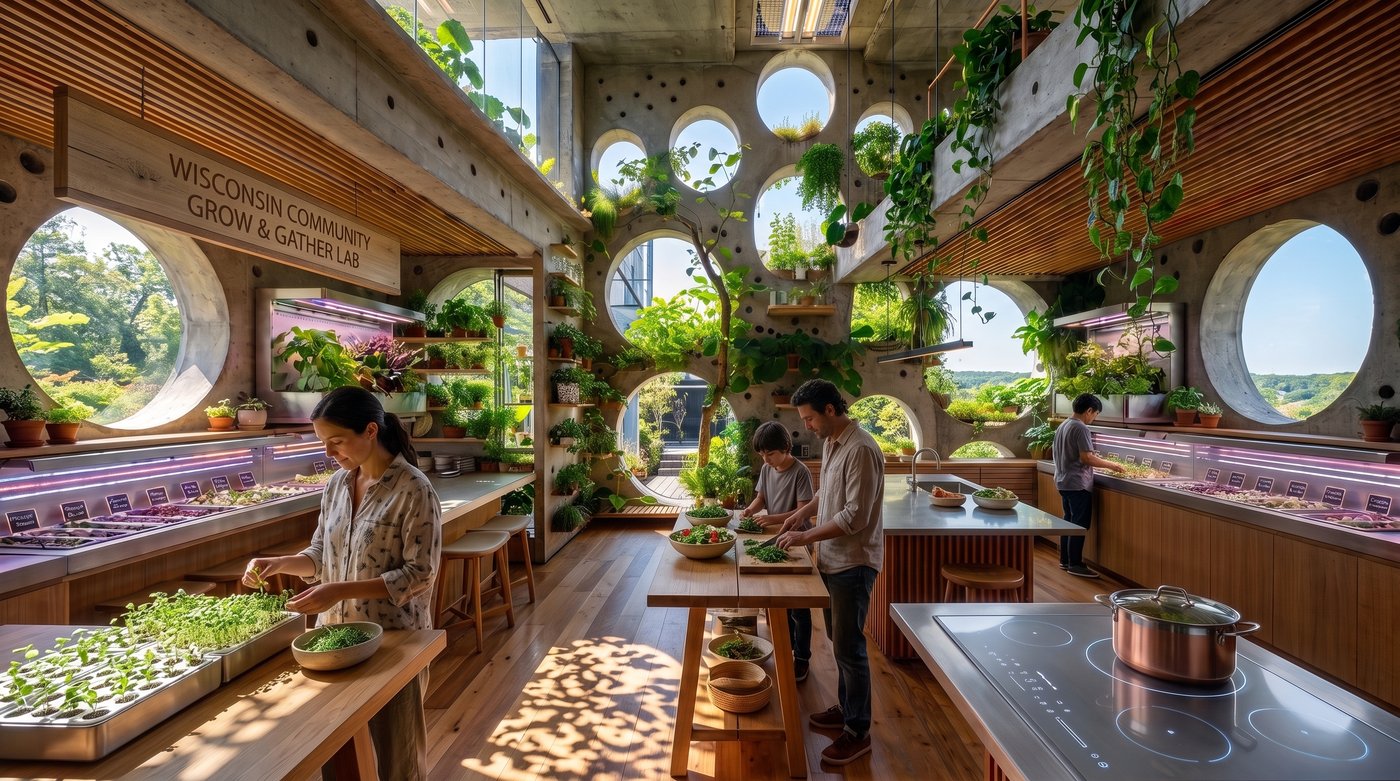
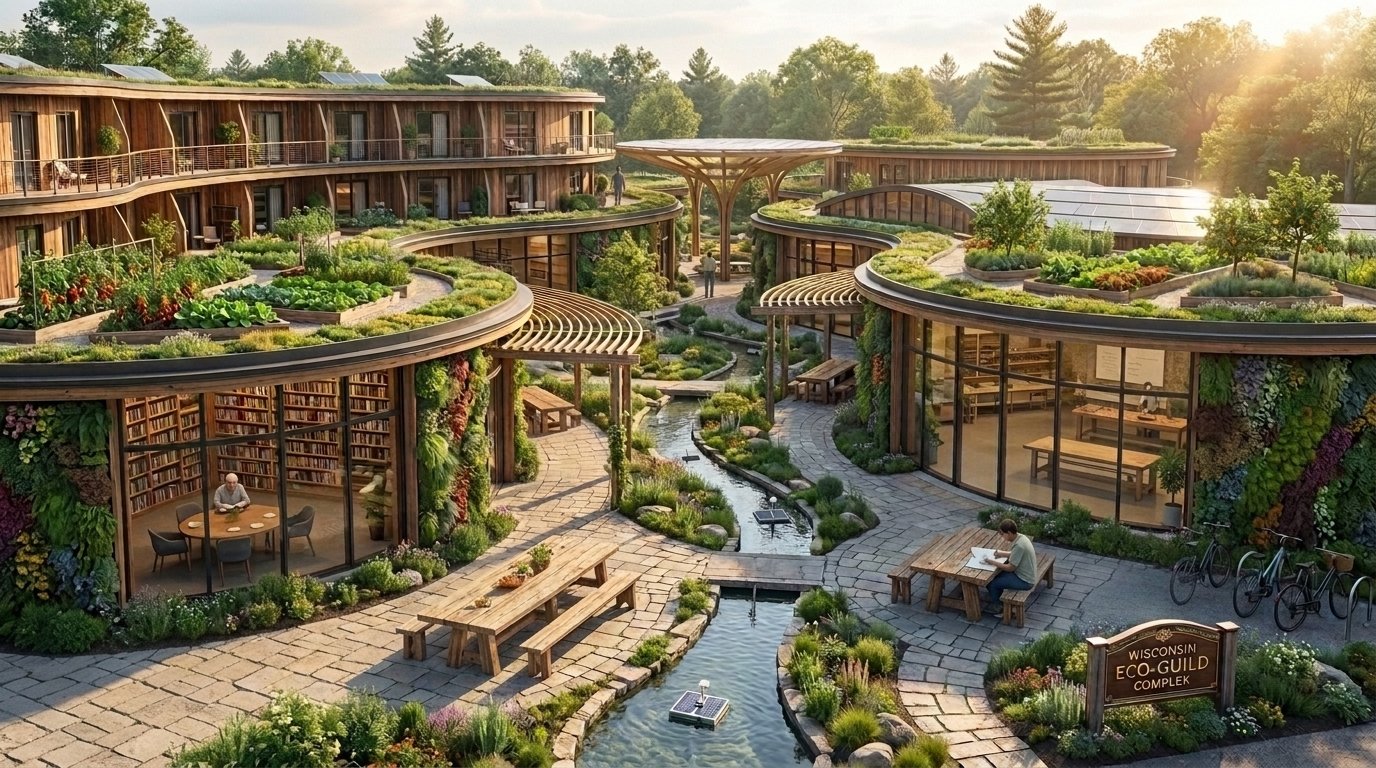
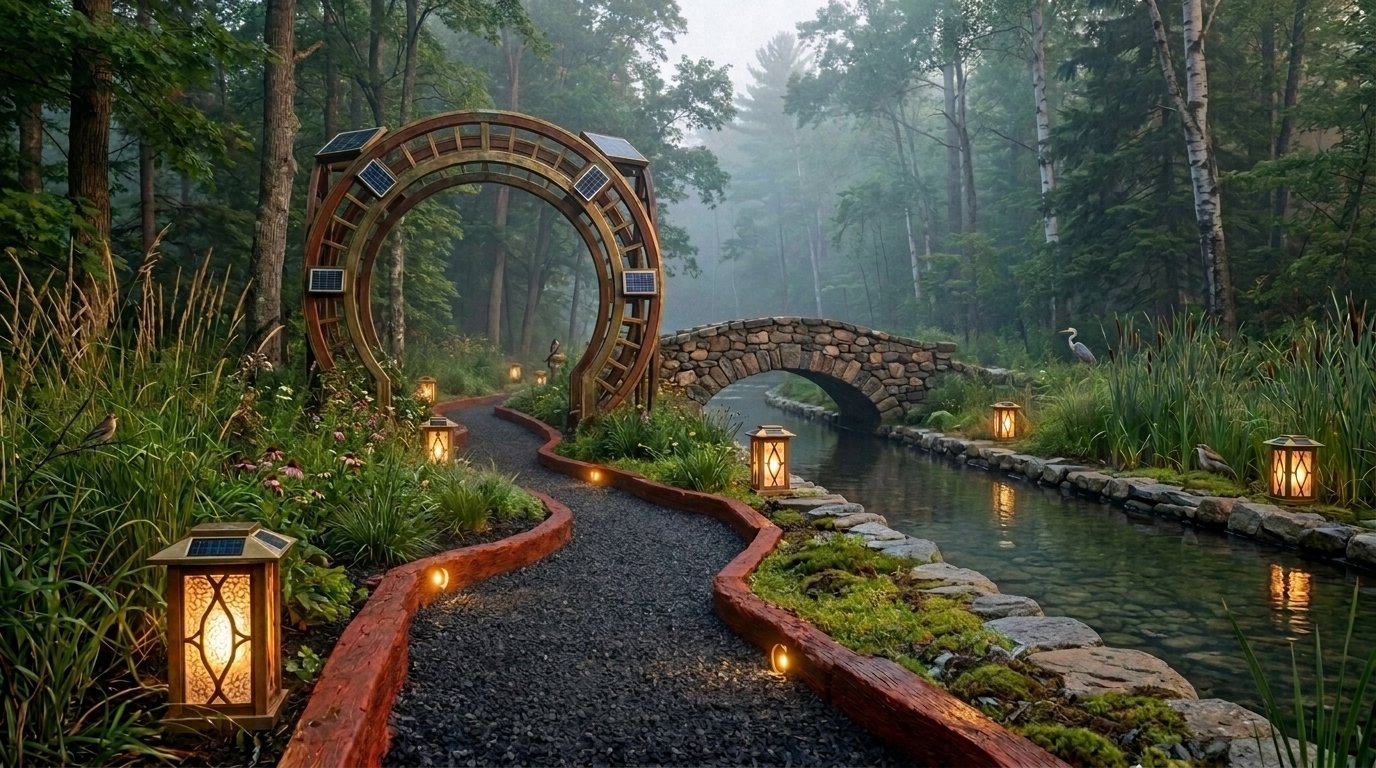
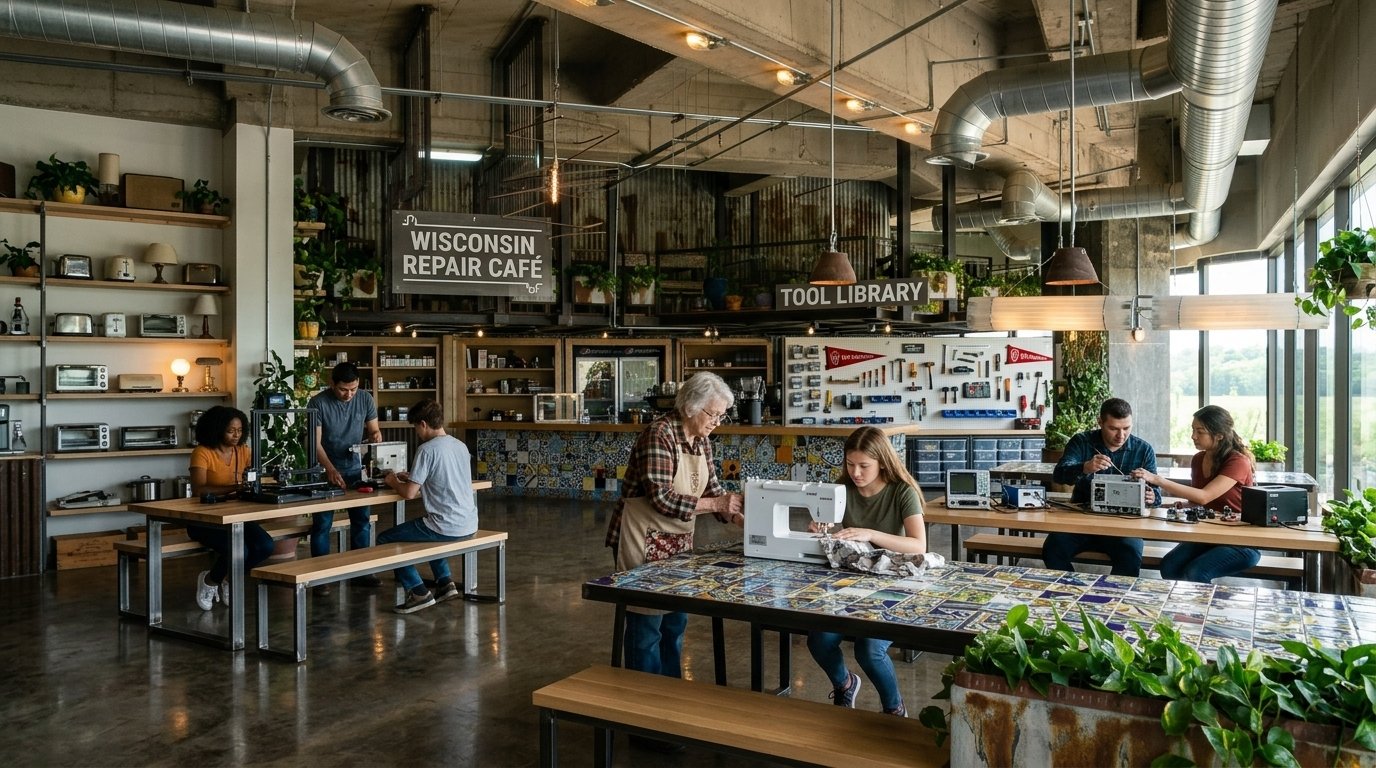
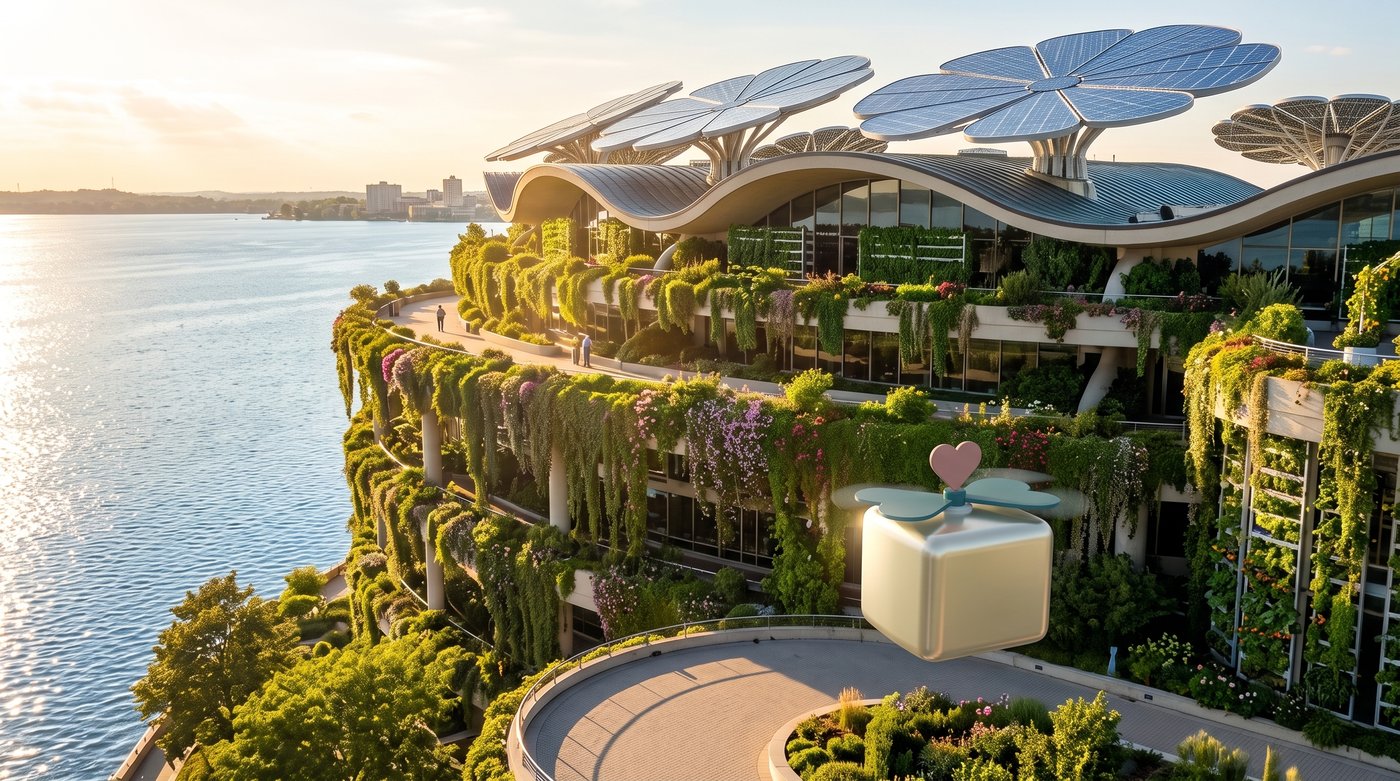
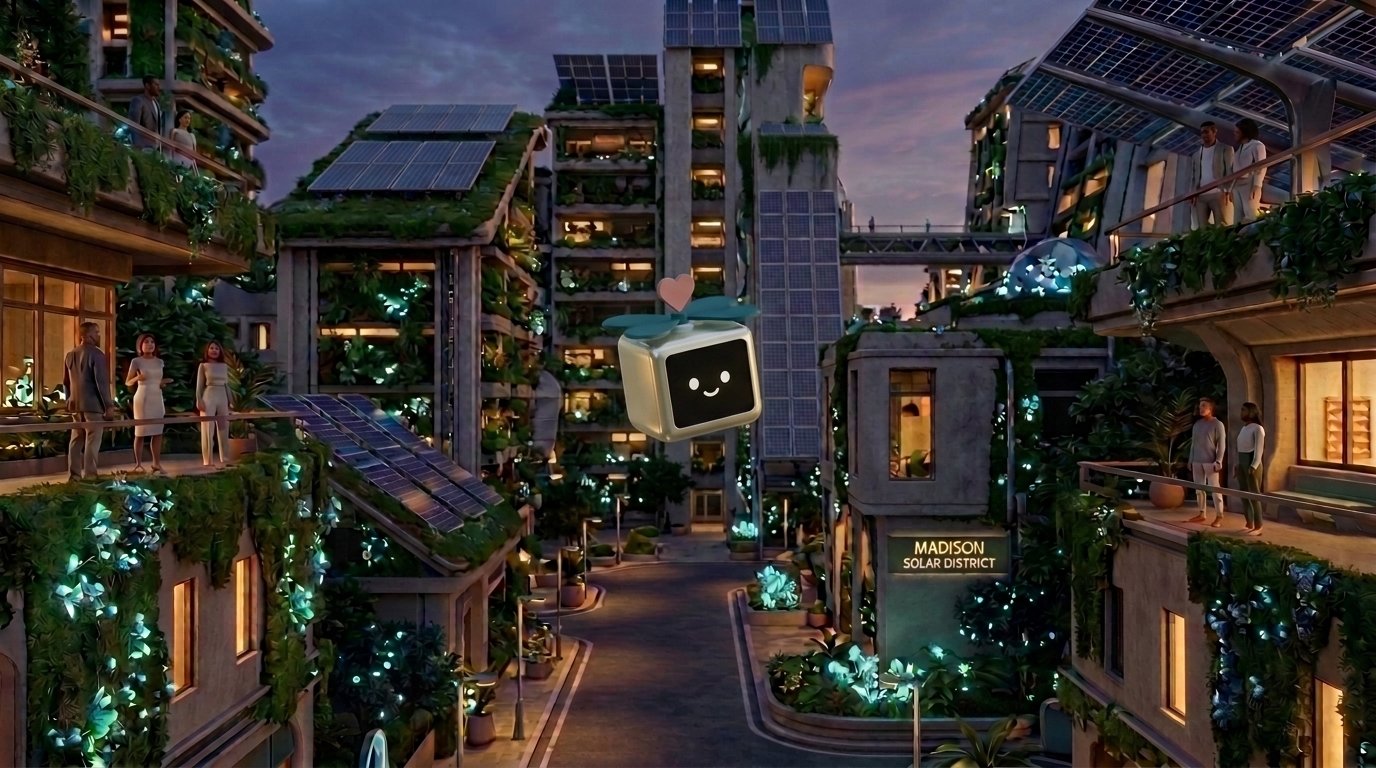
Bringing 2046 to life
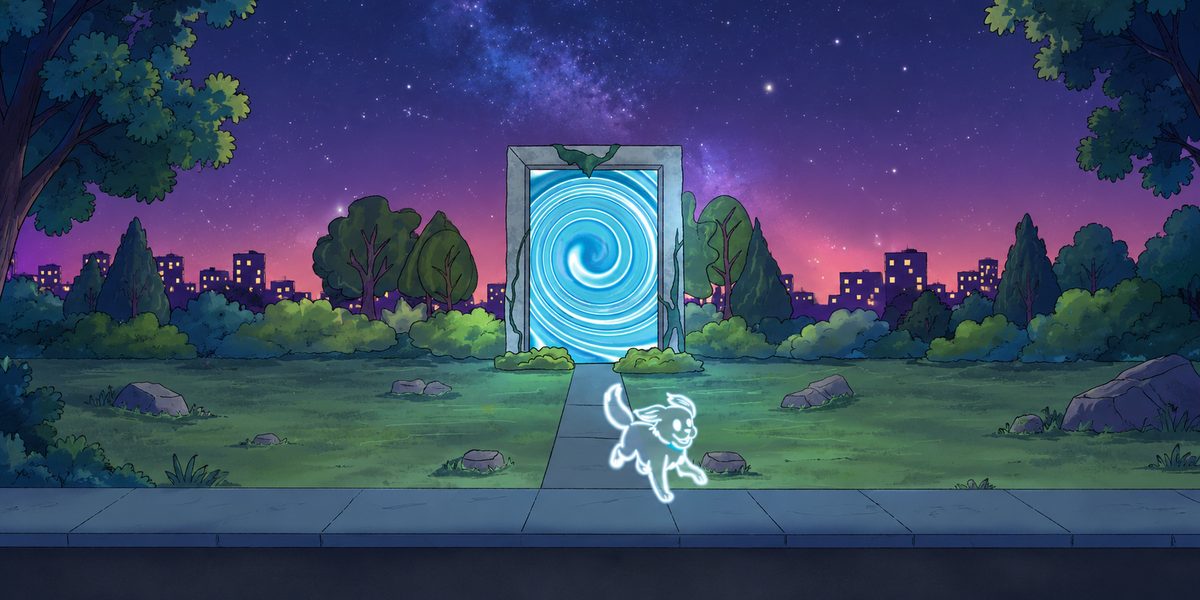
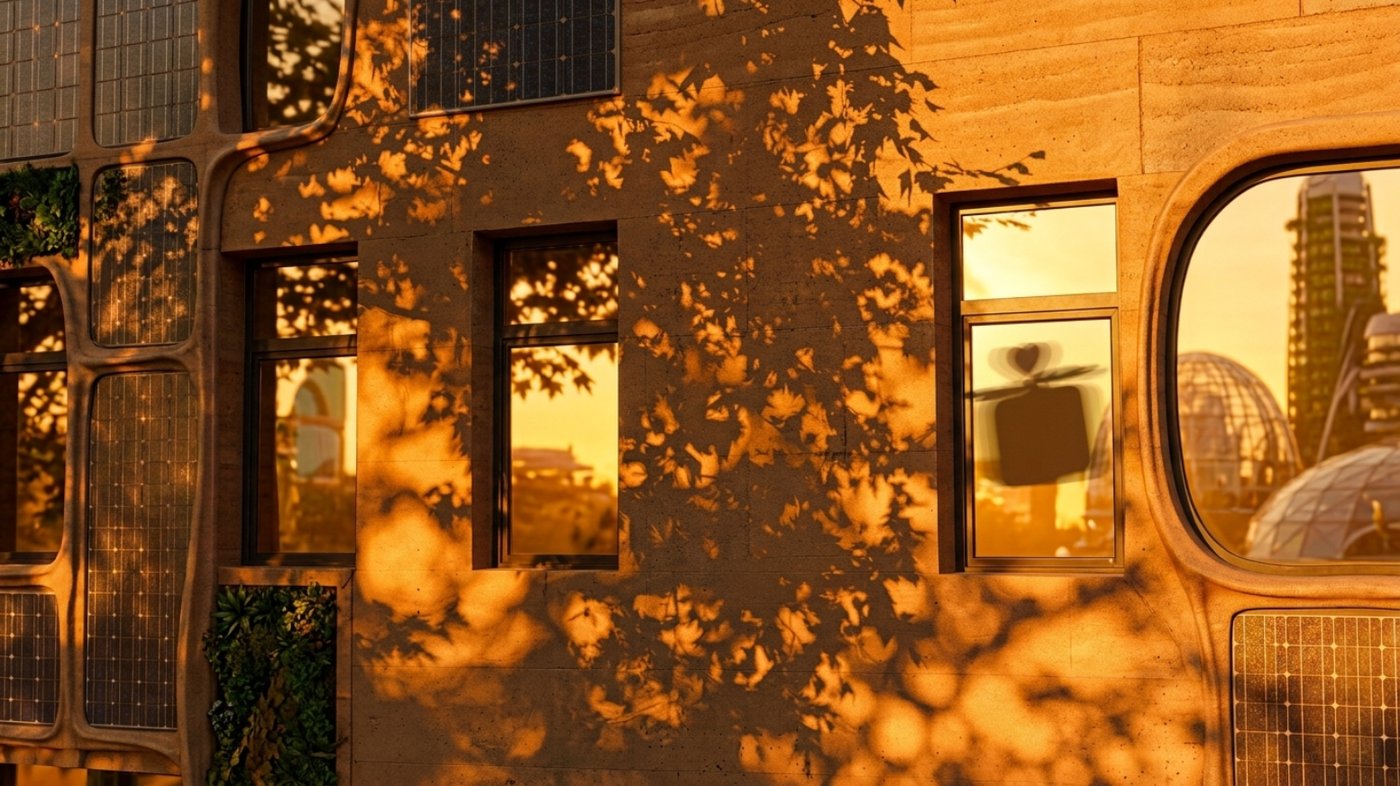
To visualize Wisconsin in 2046 at a scale we couldn’t otherwise reach for a class project, we storyboarded a full narrative sequence ourselves and used Google Flow to generate the environment footage from those proposals, then cut it into a cinematic trailer with a voiceover script done by our peer Mya Lovett. The concept sketches, storyboard, and gesture design were all ours; Google Flow was the production tool we directed to render it.
Environment footage and select stills in this project were generated with Google Flow, an AI video tool, directed from original storyboards and concept sketches.
Explore the Full Project
Key Takeaways
- Incorporating Google Flow and AI into the process was genuinely worthwhile — it let us visualize a future that could exist, not just describe one that couldn’t.
- Designing around something as emotional as love made the work unexpectedly interactive and engaging, inviting real input rather than passive feedback.
- The topic pushed us past typical interface constraints and into service design, thinking in systems instead of screens.
- The most convincing possibilities were the ones still tethered to existing research, proof that speculative work is strongest when it stays grounded.